Wednesday, 15 June 2016

Interview - Graham Austin-King

Hello Peeps!

I'm delighted to bring you yet another instalment in our ongoing interview series targeting great authors doing amazing things. This week I had the privilege to sit down and chat with Graham Austin-King. Graham has done some incredible things since he burst onto the scene with the first book in his Riven Wyrde Saga, and he spoke openly about the ups and downs of publishing. 

Enjoy!

Graham Austin-King, welcome to Smash Dragons!

First up, tell me a little bit about yourself and your career as a writer so far.

I've been writing stories my whole life. English was always my favourite subject in school and it's always been something I'd love to have made a living from. That said, I wanted to be an astronaut and Superman too. I read EVERYTHING as a kid and kind of put authors in the same category as movie stars. In my head you didn't just become an author, it was something unattainable.

That said, I've been writing stories forever. I got into roleplaying games as a young teen and quickly moved from playing a character to running the games and writing the campaigns. It's actually a lot like writing a book. Writing is like a roleplaying game for one.

Stupidly I never studied writing in university. I've studied journalism, international relations, and law. I've worked in media, finance, and lost my soul in the Civil Service. If I had my time again I'd have studied writing.

The first books I self-published were children's books for my kids and I think that's probably when I became aware of self-publishing. I'd found Kindle Direct Publishing almost by accident and, through a number of Facebook groups, became aware of how many people were trying, and succeeding, with their books. Suddenly what had once seemed so out of reach became a lot more realistic, and I started writing Fae – the Wild Hunt.

What made you pursue a career in writing? Was it something you always envisaged yourself doing when you were younger?

I've touched on this already but I guess the answer is both yes and no. I always wrote, I just didn't think it was something that normal people could achieve.

Do you remember the first story you wrote? What was it about?

I tried writing something when I was about nineteen. It was sort of a horror/thriller along the same vein as Dean Koontz. The concept wasn't bad but the writing was NOT good. It was about a woman with multiple personality disorder. One of her personalities was self-aware and wanted to be free of her body. It was also psychic and was using its/her abilities to project nightmares into the minds of the other students. The idea was that if it made enough people afraid of it then that belief would give it the power to leave her body and exist independently. Now I think back on it, it's not a bad concept. Maybe one day I'll go back to it.

What roleplaying games did you play and write campaigns for? Can you recall your favourite moment from these games? Do you remember the first character you created for an RPG? 

I started roleplaying with Warhammer Fantasy Roleplay which was created by Games Workshop. My first character was your stereotypical elf. I'm pretty sure his name was Linflas, though I might just be stealing that from somewhere else. Anyway I soon realised that I much preferred running games to being in them (depending on the DM).  It wasn't long before I moved onto other systems though and I've played a whole bunch since.

I wrote my own campaigns using the Rolemaster system which is a bit like MERP on steroids. I'm a vindictive DM and I've done everything from curse my PC's to running a campaign where they were essentially penniless the whole time. I think my favourite memory was when one of my players summoned a demonic familiar. He was probably expecting something helpful. He ended up with an overly sarcastic imp that followed him around and essentially heckled him the whole time. Trying to sneak up on sleeping Ogres when you're familiar is loudly shouting "Don't wake them up, Mr Oh So Powerful Wizard!" didn't end well.

We here at Smash Dragons really enjoyed your Riven Wyrde books. How did the idea for the series come about?

Good question. I'd wanted to write something about fairies for a while. I'm not sure entirely sure where the notion came from but it was something about the original concept of faeries. These were things that were genuinely feared once upon a time, when the night was pitch black and people huddled close around the fire, clinging to the light.

I'm not much of a planner when it comes to writing. I tend to make things up as I go and see where it takes me. Some of the things in the books were planned out from day one but a lot of it just developed as I went along. The glyphs, for example, that become more important in the latter half of the series, took me completely by surprise.

So the story sort of developed organically. If faeries are real then where are they? If they are kept out of the world, then by who and what?

One of the things that fascinated me with your Riven Wyrde books was your incorporation of horror elements within what is arguably an epic fantasy saga. Was this something you consciously set about doing? Or did the story take you down that dark path naturally?

I wouldn't have said that I was aiming specifically for horror but I did want it to be dark. I've always loved horror writing, especially when it touched fantasy. Writers like Clive Barker and Stephen King are definitely among my influences.

I think I worked quite hard, especially with Obair's character, to inject an element of bleak despair – that much was certainly conscious. I also wanted the fae to be downright scary. I think there's a world of difference between a brutish monster and a creature more capable of thoughts and feelings. I wanted the fae to definitely be more like the latter but to see mankind as so far below them that they were not worthy of consideration. Mankind are like cattle to the fae, possibly even lower.

I adored the world building that you did throughout this saga (Haven, the world of the fae, the melting pot of cultures and ideals etc). I have read before that you originally didn’t want to write a sprawling epic fantasy loaded with detailed world building. What changed?

The original plan kind of went out the window. I had this idea for an epic fantasy but somehow focused on Widdengate, almost as if the story was zoomed in on the village and whilst things are happening in the wider world the reader only gets to experience them as they impact upon the village.

It was a cool idea but, in practice, I couldn't make it work. By the time I started writing about Kloss and the Bjornmen I'd more or less abandoned it. The story wouldn't have worked within those confines.

Did you have a favourite character when writing the saga? Why?

I have a few. I think my overalls favourites are Selena and Ylsriss. Selena is probably my favourite character overall. She grows a lot over the three books. They both have some great lines. That sounds a bit arrogant, as I wrote them, but they were both very easy to write and the dialogue flowed easily with both of them.

What was the reasoning behind self-publishing these books?

You imply this was well thought out. The reality is that I was stupid, naive, and impatient. I finished Wild Hunt and sent it out to agents long before it was really ready. I self-published before it was ready too and it's been pulled and re-edited a couple of times now.

I'll hold my hands up and admit I made big mistakes there. I was learning as I went and not doing a great job of it. Thankfully I found some good editors and the books are better for it.

What were the benefits behind self-publishing the Riven Wyrde books? What were the drawbacks? What challenges did you face as an author trying to market your books to a global audience?

The benefits to self-publishing are in the royalties. I earn far more from an individual sale than someone like Mark Lawrence. That said, he sells far more books than me. Publishing has changed a great deal and even the major players are required to do far more of their own marketing than they ever used to.

The drawbacks are obvious. If you choose to self-publish you are on your own. You need to find editors, cover art, formatters etc. This is all going to cost, and if you try to do things cheaply then you will usually get what you pay for.

You're also responsible for your own marketing which is a huge challenge. I have no idea how I've managed to make my books stand out a little. I know other authors who's books are no worse than mine, some are far superior, who are simply not being read. There are millions out there and more being published every day.

I'd like to be able to pretend that I know what I'm doing but really I'm just fumbling my way along. Some of the things I do must be working but I couldn't tell you which ones they are.

How did you grow as a writer as the trilogy unfolded?

Oh my writing definitely improved. I think each book is better than the one before and personally I think it shows in the characters. My prose also improved with writers like Mark Lawrence and Patrick Rothfuss being a huge influence.

I also learned a hard lesson in that just because it makes sense and is obvious to me, it might not be so clear to the reader. I actually had to write an entire scene into the second book because a number of people who read Wild Hunt didn't get something I thought was blindingly obvious. Of course I knew it, I wrote it. I was too close. So I basically put a great big neon sign into the second book so people would get it.

You mentioned that you like to write and see where the story takes you. What are the disadvantages and advantages to this approach in your opinion?

Well the obvious disadvantage is that I don't know where the story is going either. I had almost completely painted myself into a corner by the end of the first book, or so it seemed at the time. (Spoiler alert) With the fae released, running riot over Haven, and seemingly far superior to mankind, how was I going to claw this back? It took some long walks, during which I openly talked to myself and gathered many odd looks, before I figured it out.

The advantage, at least to me, is that it flows better. I've tried plotting things out before. Anything that goes beyond the roughest of sketches is a waste of time as I'll go off on a tangent anyway.

Who are your literary influences? Why?

Clive Barker definitely for creating that feel of forgotten or hidden truths. Robert Jordan for much the same reason. Lawrence and Rothfuss for the beauty and pure poetry in their writing. Hugh Cook and Joe Abercrombie for gritty realism. I could go on for days here...

Pratchett because, well, he's Pratchett.

If you could sit down for a cup of tea with another author (dead or alive) to get advice who would it be? Why? 

Hugh Cook. He wrote an amazing series of books, "The Chronicles of an Age of Darkness" but they were plagued with poor sales. He was the first author I ran across that leaned toward the "grimdark" with a gritty, harsh, realism. He actually had a 60 part saga planned that would be formed of intersecting series. It would have been amazing to just sit and pick his brain.

Take me through a day (or night) of writing with yourself. Do you have a word goal? Do you like to plan what you’re going to write or do you just pants it and see what happens?

I do set a word goal. I like to get at least 1500 words done a day and average 10k a week. That doesn't always work out and my word counts are always much lower at the beginning of a book.

I stay home with my kids so once I have them off to school and nursery then I start work. I write in 30 minute sprints using an internet blocker (yes my self-control is that feeble) and use the time in between to sketch out what I want to happen in the next section.

How much research did you undertake before writing your books? What was it about the Fae and their mythology that fascinated you?

Not a lot. The internet allows me to research as I go. Right now I'm writing about mining and smithing a lot and there is a wealth of information that I can access pretty much instantly.

I think what drew me to the notion of the fae is that the fairy myth is pretty much global but the effects of Disneyfication mean that most fairy tales now have them as benevolent, friendly, creatures. This is definitely a new thing. Even Tinkerbell wasn't benevolent if you go back to JM Barrie's original work. She abducted babies, kept them for her own ends and tried to kill the girl that interfered.

I wanted to get back to a more Grimm style fairy tale. Of course, from there I went out on my own with my take on satyr and the fae'reeth, with glyphs and the almost-religion of the fae and the moon.

Most interesting tidbit you've discovered whilst researching for your writing?

Just about every nation on Earth has a myth of fae/faeries/wee spirits of some form. Composite bows are actually made of layers of different materials. It makes sense when you think about it, but I never knew.

Arrows are bloody deadly. You're far more likely to die from the wound becoming infected than anything else though... this happened a lot!

What’s the most loved book in your library? Why?

Pawn of Prophecy. Well the entire series really. Pawn of Prophecy was one of the first fantasy novels I read. I've probably read the series a hundred times or more over the years. I still go back to it now on occasion. David Eddings gets a lot of stick for some reason. I think if these books were released today they'd be marketed as young adult. Luckily I read them when I was the right age and they just resonated with me. Reading them takes me back to those first steps into a fantasy world.

What are you working on right now?

I'm working on a novella which has now taken on a life of its own and grown into a novel. It was supposed to be me taking a break, just small project to clear my head. As it stands it's definitely going to be a full length novel and may even grow into a series.

It's about a religion dedicated to the god of creation, specifically with regards to blacksmithing and fire. Most of the book takes place within mines that run deep under the temple and the slaves that serve the temple from them.

Sometimes it's not just darkness that lurks in the deeps.

Will you be appearing at any conventions or events in the coming months? 

I'll be at Nineworlds in London in August and then a bunch of smaller shows later in the year.

Worst writing tip you’ve ever received?

To read over my work, make each chapter perfect before moving on to the next.

And finally, best advice for those of us looking to get into writing?  

Just do it! Get started! Don't read back over what you've read, you can polish anything and make it better. To start with just bang some words out and make sure you write every day (or every day you can).

You can find out more about Graham and his work via his website. The Riven Wyrde Saga can be found online at all good book retailers. You can buy the entire saga at Amazon for little over 7 bucks! An absolute bargain for what is great dark fantasy. 

Until next time peeps. Be nice to each other, and keep on reading. 

Friday, 10 June 2016

Review - Squid's Grief by DK Mok.

I remember the first time I saw Bladerunner. I sat down with my dad, snacks within reach, and we watched it from start to finish without a word spoken between us. At the end, my dad turned to me and asked me what I thought. Still buzzing, and my brain still racing over what I had just witnessed, all I could manage was a soft whisper.

"That was awesome..."

I was reminded of that moment when I read Squid's Grief. Both Bladerunner and Squid's Grief share a heritage. A sprawling metropolitan... a dystopian society... and gangs and crime out of control. I'm a sucker for that sort of thing. I love cyberpunk stories... their fusion of high tech with low life... societal breakdown alongside wondrous things like cybernetics. And when Mok introduced touches of noir to the mix I knew I was going to enjoy this book. And enjoy it I did!

Squid's Grief is a wonderful example of a character driven story. Everything revolves around Squid and Grief, and their evolving relationship interaction with other characters as the story unfolds. And as I ripped through this book I was constantly amazed by Mok's ability to write a riveting tale without too much exposition or explanation. There is very little telling, but a helluva lot of showing. Both Squid and Grief themselves are amazing characters. Both provoke deep sympathy and emotion from the reader, and both have incredibly powerful agency throughout the story. I was especially impressed with Mok's ability to portray an amnesiac (Grief) slowly learning about himself and his latent abilities as events spiral out of control around him. The other points of view are also impressive. I really enjoyed Casey and her friendship with Squid, despite the fact that they are the opposites (Casey is a cop) of each other.

What took this story to another level however was the depiction of Baltus City. Mok takes a setting, and brings it alive to the point where it becomes another 'character' in the book. I was riveted by the tidbits about this environment, and its futuristic vividness placed alongside its seething slums and crime regions really drove home how organic and alive it was.

The action sequences were also brilliantly conceived and choreographed, and the pace relentless and uncompromising. Where this book is let down, in my opinion, is that the pace is TOO relentless towards the end. As I blazed through the final third I just felt that the story came off the tracks a little and went over the top with its ending. Mok could have arguably reined it in and finished with story with just as much impact without the disjointed feeling. Overall though this was a minor issue, and didn't really detract too much from my enjoyment of this well crafted tale. I still am amazed at how well Mok writes, despite being relatively new on the scene.

If you love cyberpunk fiction you will adore this book. If you enjoy noir stories with shifting allegiances and twists you will adore this story. Frankly, if you love good fiction you will find something in this exciting tale.

A scintillating cyberpunk tale with impressive elements of noir fiction and action thrillers, Squid's Grief continues to showcase the rise of a future mainstay of Australian speculative fiction.

4 out of 5 stars.

You could find out more about Squid's Grief here. Also, be sure to check out Mok's other work. Hunt for Valamon is especially superb. 

Wednesday, 8 June 2016

Interview - Simon Dewar

Hey Peeps,

I am delighted to bring you all yet another instalment in our ongoing interview series here at Smash Dragons. This week I had the amazing privilege to be able to sit down and chat with editor and writer Simon Dewar. Simon has recently exploded onto the scene with his amazing anthology Suspended in Dusk, and he took time out of his busy schedule to chat about all things horror and editing. 

Enjoy!

Simon Dewar, welcome to Smash Dragons!

Thanks for having me!!

First up, tell me little about yourself. How did you start writing and editing?

I grew up on fantasy… stuff like David Gemmell, Eddings, Robert Jordan.  I never really thought I’d start writing, or perhaps I toyed with the idea but figured I’d go into fantasy.  Sometime around 2012 I got the bug to try a short story and so I wrote one called The Kettle and managed to sell it to the Bloody Parchment horror anthology published by eKhaya, an imprint of Random House Struik.  Selling your first short story on your first try is terrible… it left me woefully unprepared for all the rejections to come!

Suspended in Dusk is an amazing collection with a wonderful variety of talented authors. I’m curious, how did it all come about? Can you remember the moment the idea for this collection popped into your head?


Thanks for the kind words.   I floated the idea of an anthology to Nerine Dorman, a writer and editor in South Africa, and she agreed to edit it if I compiled it. We were going to put it out through Dark Continents Press. We came up with Suspended in Dusk as a working title, because we couldn’t think of anything else at the time. It was actually going to be an un-themed anthology.  As I began to approach authors and began to collect some stories, I realised that they gelled pretty well with the title. They were all stories about change or being on the edge between the dark and the light, or trapped between places. After a while I just started telling people that was the actual theme and no one was the wiser!

Suspended in Dusk almost didn’t come about. Can you elaborate on the trials and tribulations you went through to get it published?

I’m not 100% sure why, but for whatever reason Dark Continents couldn’t proceed with Suspended in Dusk. A short while later they actually closed up shop, so they were probably in the process of winding down, I guess. When that happened I was left with 19 stories that I’d collected, from extremely talented writers like Ramsey Campbell, Angela Slatter, John Everson, Alan Baxter as well as a lot of “young blood” (like me!).  I really didn’t want the project to fold.

In the end, I pitched to a couple of presses and Books of the Dead picked the project up. The book has been very successful. For about 11 months it was in the top 20 horror anthologies in the kindle store and briefly hit number 1. 

How did you hook it up with Books of the Dead Press?

After I’d re-pitched the anthology and had some interest but ultimately rejection, JC Michael (one of the SiD authors) approached me and said “Hey, I’ve got a book with Books of the Dead Press. James Roy Daley is a real straight shooter, maybe give him a try!” So I did.  

James liked the idea and Suspended in Dusk was bought by Books of the Dead Press.  I’m pretty proud because I’ve heard that it is extremely rare to re-home an anthology project that has fallen through with a publisher.  I’m glad my hard work and the work of the authors didn’t go to waste.

The legendary Jack Ketchum wrote the introduction to Suspended in Dusk. How did you manage to pull that coup off?

I took Jack Ketchum’s Litreactor course “Talking Scars”. It was a fantastic course and I really learnt a lot and thoroughly enjoyed it.  While I was taking the course I met some cool people and asked them to submit work to Suspended in Dusk. These people included Wendy Hammer, Sarah Read and Karen Runge. I was very impressed by their classwork and knew I wanted them to be a part of my project.  

When I was done I asked the course coordinator to contact Jack and see if I could hit him up for a story.  We got in contact and his response was along the lines of “I can’t give you a story right now due to commitments and I’ve already had to turn down quite a few folk, but send me a 12pt Times New Roman, double spaced hard copy of your manuscript and I’ll consider writing an introduction”.

So when I was ready I posted it off—cost me like $60AUD just to get it to NYC—but I guess he liked it because he wrote a very cool and very flattering introduction. I was honoured and humbled. Still am!

What skills did you learn whilst bringing the project together?

Most important ones:

  1. Aim high – You can achieve cool things, work with cool people, make a great product but you have to aim high. What you get in the end will always be lower than what you aimed for… I dunno why, creative gravity or something will drag your arrow down… so aim high.
  2. Don’t give up. Projects grind down, sometimes to a halt. Sometimes you need to step back for a day or a week before you can get back to it, but don’t give up. The only thing that stands between you and finishing the story, the novel or editing the anthology is persistence.

What is your secret to maintaining a good work/life balance?

Fuck, man. I don’t even know.  I guess the secret is… Put your family (I’ve got a lovely wife, a 4 year old and twin 2 year olds!) and your day job first—that has to be non-negotiable. Then, any spare moment you have you cram with your writing or your editing.  I’m talking squeezing in edits on a quarter of a short story on your lunch break or in the hour you have after the kids are in bed and all your household chores are done before you have to hit the sack so you can get up for work in the morning.   If you want results, you’ve gotta be hungry, but you just have to prioritise.
   
Do you have a preference when it comes to editing or writing? Do you think they both complement each other?

Reading critically, beta reading, slush reading, editing stories or an anthology WILL improve your writing. I do, however, think that editing saps your creative juices. If you’re doing a lot of editing (novels, anthologies, etc) you’re probably not going to be in the right creative mindset to work on your own fiction.

I’ve got some more editing in me yet, and even then I’ll probably do some anthologies again in the future, but it’s coming up to time for me to have a bit of a break. I want to get some more of my own fiction out there and I find it extremely hard to be creative when doing a lot of work for other people.

Editing an anthology is a form of creation or creativity, and it does bring a lot of satisfaction, but it’s not as satisfying for me as writing my own work and seeing it published and seeing someone enjoy reading it.

What appealed to you about an anthology exploring the theme of that moment between light and dark?

Life is change, and change is either better or worse. Change, one way or the other, is taking you into the light or the dark. This time of dusk... the time between times… the time between the light and the dark…this grey area—that we all find ourselves in from time to time—is the fulcrum—the tipping point. This tipping point is the penultimate moment of change—It’s where things either come good, or go badly, badly wrong. This is a fantastic place for good stories to be found, written and collected, I think.

Do you have a favourite story within the anthology?

I don’t have any specific favourite in terms of content, I chose them all because I loved them for what each story individually is. I do feel very well disposed towards A Keeper of Secrets by Ben Knox, because Ben and I both worked very hard on that story to achieve as tight a story as we could but also tell the story he wanted to tell with the aesthetic and voice he wanted. It’s a fantastic horror story. Its sequel story, Mother of Shadows, is featured in Suspended in Dusk 2. It will read fine as a standalone story, but it continues the story from the first book and readers of Book 1 should really enjoy it.

You’re a big fan of horror fiction and speculative fiction in general. What books/stories are your favourites? Why?

I’ve never really thought about it too much, but I seem to gravitate to haunted house stories.  Three of the best are:  The Haunting of Hill House by Shirley Jackson, Hell House by Richard Matheson and Hide and Seek by Jack Ketchum. I found Hell House to be particularly confronting with its intense poltergeist and poltergeist-rape scenes. The audiobook version of it is top notch. Hide and Seek scared the fuck out of me. I listened to the audiobook version read by the extremely talented Wayne June and my heart was pounding in the last few chapters. It was all the better because it wasn’t a supernatural haunting.

Funniest typo you’ve come across as an editor?

I feel I should know the answer to this question but I don’t. When I’m working on anthologies there is so much going through your head… grammatical/developmental issues with the current story; what might face you with the remaining stories; author correspondence; liaising with the publisher; marketing, etc.  I’ve probably read some real corkers, but frankly, I don’t remember any of them. I just fix that shit and move on ASAP.  No time to lose and even less time to second guess/ruminate.

Tell me about your own writing. What sorts of things do you like to explore in your stories?

I suspect I have a few hang-ups from my teenage years because I tend to write a lot of fiction which has teenage protagonists but themes or content that are only readable by adults. The world is a brutal place and I don’t really tone down my fiction to make it more palatable to a group or subset of readers. This makes it hard to sell, but also rewarding when it does. Some of themes I’ve explored in recent works are: school bullying, racism, the “creative spark” within us.

If you were selected to join a Mars colonization mission what 3 books (only 3 due to payload restrictions) would you take in hardback? Why?

Blergh, that’s super tough. Possibly:
  1. Three men in a boat by Jerome K Jerome.
  2. Catch 22 by Joseph Heller.
  3. Complete works of Arthur Conan Doyle. 

I’d hate that I had no horror in there, but the above makes for fantastic laughs and intrigue, and endless re-reading.

What are you working on right now?

I have a short story I’m finalising and hoping to sell.  It is somewhat satirical, but deals with racism and Lovecraft. It’s set in 1920s NYC and has a black protagonist. It’s somewhat reminiscent of Lovecraft Country by Matt Ruff or the Ballad of Tom Black by Victor LaValle, I suppose (p.s all folks need to read those books, if they haven’t they’re doing themselves a disservice. Unfuck that, ASAP).   

I’ve had one offer on the story so far from a beta reader who is a magazine editor, but I’m still finalising rewrites/edits and I’m hoping to sell it to a pro market. The piece has had some very mixed reactions with some beta-readers being almost offended and others thinking it is a fantastic piece. Let’s assume I sell it—I’m looking forward to the reaction. I think it’s going to generate some discussion.

You’ve been a member of the Canberra Speculative Fiction Guild for a while now. How has the guild helped shape you as an editor and writer?

I’ve not been as closely affiliated with CSFG as I’d like. I think CSFG is truly fantastic because they offer great services for members—e.g critique groups attended by folks who’ve made quite a few pro-sales, or have won competitions like Writers of the Future, or have sold to markets like The Black Library or Angry Robots. 

It is also very democratic in that they put out an anthology every year and give opportunities to all members to put their hand up to edit it etc. If I didn’t have three kids I’d like to be more involved with the group, they’re fantastic. As it stands now, any free time I have goes on my projects and that’s it.  They’re definitely a group worth joining if you’re in the area and they’re all genuinely great people and there are no egos involved.

What’s your favourite line from a horror book or movie? Why?

Probably the opening line to Jack Ketchum’s The Girl Next Door—

You think you know about pain?

This one line challenges you, scares you, tantalises you and lets you know exactly what you’re in for.  If you didn’t know about pain, you will by the end of this book. Oh you will. This is one of the best opening lines ever written. Hands down. 

Got any tips for people looking to become editors or writers within the horror industry?

If you want to be a writer, don’t try and do serious writing while you’re doing serious editing. Editing will drain you and you’ll find it difficult to write—in my personal opinion, anyway.

Completely ignoring the advice above—whatever works for you to produce your art and and whatever achieves a sale of a story/book/etc… that’s what you need to do. Don’t be afraid to be different.

Editing is great, but if you see yourself as a writer you’re likely to find it’s not as satisfying in the same way as seeing your own work published. Bear that in mind. Any time you spend working on editing other people’s work is time you’re not writing your own stories and really honing your own craft.

All those people out there selling lots of stories and winning lots of awards etc.—guess what—they write a LOT of stories. Whether its shorts or novels, or both, they’re out there writing their asses off. If you think you can write a handful of stories and they’re just going to sell and you’re going to win an award and get some recognition etc.—think again!  Seriously, if you wanna do something with your art—you have to write, and submit. You’ll get rejected… so revisit your work, adjust it and then resubmit. You’ll get rejected again, so rinse and repeat. You’ll get there, you’ll sell your work and people will read your stories or books…but don’t expect anything less than a hard slog.

I know of people who’ve taken 2 years to sell a particular short story or had their novel rejected 100x before selling it. Welcome to the #writerlife. 

What's your take on the horror scene right now? Where do we need to do better?

For readers, the horror genre is extremely healthy. You’ve got people like Paul Tremblay, Stephen Graham Jones, Joe Hill, Nick Mamatas, Silvia Moreno-Garcia, Angela Slatter, Damien Angelica Walters, and many more doing fantastic work and getting serious recognition for it. 

You’ve got fantastic newer writers like Josh Malerman, Karen Runge, Kristi DeMeester, Sarah Read, etc doing fantastic novels, novellas and short stories. Aside from tried-and-true masters like Ellen Datlow, Paula Guran, Stephen Jones, etc … you’ve got folk like Michael Bailey doing phenomenal work in the anthology space. You’ve got people like Richard Thomas doing great work with anthologies like Exigencies, Burnt Tongues and The New Black. Suspended in Dusk was pretty well received so I indulge myself to think I’m somewhere there in the healthy mix of art that’s being generated. In terms of content and output—now is a GREAT time to be a horror reader. 

Due to my exposure to some of the recent goings on, namely HWA member RJ Cavender defrauding large numbers of people, and the all the other shit that has come to light, I have pretty strong thoughts about the health of horror fiction writing *community*. 

To be honest sometimes I wonder if there really is a “community” or whether we’re all just kidding ourselves. Doubts aside, however—There are, I think, a lot of things that need to change or be looked at in a serious manner. These can be said of other genres or fandom generally, so I’m not singling out any specific person or org, but, as a starting point:

  1. People need to stop turning a blind eye to predatory behaviour and practices (of any kind).
  2.  Organisations need to put in place policies and bylaws to limit the ability of bad actors to do bad things and to use their standing (perceived or otherwise) within the org to get away with it.
  3. Organisations, and people, need to be more vocal about malfeasance and malpractice.
  4. Organisations, and people, need to continue to speak out against sexism and harassment. And organisations should have recent, clear and accessible policies regarding these.
  5. Cons need to be made safer for everyone, including women.
  6. Cons need to have visible and accessible safety and anti-harassment policies that are enforced and seen to be enforced where instances of unsafe behaviour or harassment take place. 
  7. People need to report on the above in a sensible and informed manner and give the facts, as available, to the people. 
  8. People need to be able to report on the above without name-calling, wagon circling, misrepresentation of what they said etc. 

Now, for the purposes of discussion, the above is a starting point. I’m personally heartened that there’s actually a running dialogue on a lot of this stuff now that hasn’t been happening in previous years. I also realise that some of the above stuff is being worked on as we speak (in both the horror genre community and in SF/F/H generally) and people and orgs seem to be taking steps in the right direction. Can we, collectively, do better though? Definitely.

Can you give us a sneak peek of Suspended in Dusk 2? What can we expect from the follow up?

If you liked the first one you should like this too. If you haven’t read the first one, check this out and I think you’ll really enjoy it. Then go buy book one :-P 

The book (stories and art) is the product of a mix of men and women, people whose first language is not English, people who speak multiple languages, people of colour, people from at least 3 continents (I’ll just pretend Britain is part of the European continent and New Zealand is part of Australia, shall I!?), people of different sexual persuasions, people who are of a religion, people who are of no religion.  

Is that mix perfect? No, but it ain’t just the who’s who of old straight white men either. There’s some diversity in this book and I think it adds to the flavour and its appeal. I’m very proud of that.

There is a very cool (and pretty creepy in its own right!) introduction from the supremely talented Angela Slatter. Was very gratified and humbled that she managed to fit it in among all the projects she has going on right now. 

As with the first book in the series: there’ll be some non-supernatural “people horror”, a tale with a bit of a western ghost story feel, and something funny.

There’ll be some post-apocalyptic stories and something that touches on religious zealotry.  There’ll be a story that touches on video games and the Dark Web and one that is inspired or based on Maori mythology & religion.

As mentioned, Ben Knox’s story Mother of Shadows continues on from his story in the original anthology; although readers will definitely be able to “enjoy” it, even if they didn’t read the first book.

I think there is more emotional depth in this anthology—some really hard hitting emotional pieces. Damien Angelica Walter’s piece made me want to cry. Dan Rabarts and Annie Neugebauer took alternate turns in punching me in the guts. Karen Runge’s story is pretty tragic too.

Who are some of the horror writers that have flown under the radar that people need to check out in your opinion? 

Karen Runge is my pick (and has been for the last few years) for the “next big thing” in horror. She’s had stories in Shock Totem and Suspended in Dusk, also in some of the Grey Matter Press anthologies (including one called ‘High Art’ that we co-wrote).  She’s scarily good at what she does.  She makes characters incredibly sympathetic and then has them do a whole bunch of terrible and unforgivable things.   I was giving her an endorsement on my FB page recently and I made a typo which is still pretty darn accurate:  “She’ll pull out your heart strings [sic] and make the bile rise in the back of your throat”.  I think I read most of the stories that went into her debut collection that has just been released and they’re incredibly good. To wind up with cover endorsements from Stephen Graham Jones (who said it was “the best collection of the year”, no less!) and from Paul Tremblay (who has likened her to Joyce Carol Oates), you know she’s got talent.

I’m a very big fan of Sarah Read. She’s recently sold one of her stories to the newly Gamut Magazine but I was blown away by her story for SiD2 “Still Life with Natalie”. It’s a tad over 2000 words but she is incredibly effective in such a short period.  It’s probably the shortest or second shortest, but she really nailed it. Stephen Graham Jones’ SiD 2 story is of a similar length and I’d put hers alongside his for quality horror. She’s the real deal. 

Also, Matt Andrew. He’s got stories in Blight Digest, Pantheon Magazine, State of Horror: North Carolina and elsewhere.  I’ve read a couple of his stories in recent years and he’s going from strength to strength. I suspect he’s gonna be well known in coming years. He’s also a kickass artist too!

And finally, will you be appearing on the convention circuit over the coming months? 

I’d love to, but I’ve got so much on my plate that I don’t think I’ll get to anything this year.  I suspect my public showings will be pretty light on until the youngins are a little older. Perhaps next year. 

Simon Dewar, thanks for stopping by!

Thank you for having me!

You can learn more about Simon and his work on his blog. You can purchase Suspended in Dusk at all good online book retailers. Here is the Amazon link.

Review - Suspended in Dusk ed. by Simon Dewar

I first stumbled upon Suspended in Dusk when I was browsing Facebook one rainy day a few months back. I can't recall which one of my friends was raving about it, but her words about it ('an emotional gut punch') piqued my interest. An emotional gut punch... sounds like something I'd like.

So I went online and had a poke around, searching for some reviews to read before I purchased it. I didn't get much further. As soon as I saw that Jack Ketchum had written an introduction to it I decided to just take the plunge and give it a go.

Best decision I've ever made.

Suspended in Dusk is, to put it simply, stunning. In both its vision, and its execution.

As soon as I started reading it I knew it was going to be good. Ketchum's introduction set the tone. Words like 'fresh' and 'auspicious debut' ramped up my excitement, and then the first story (Shadows of the Lonely Dead by Alan Baxter) brought tears to my eyes and knocked it out of the park. 

I was hooked from that moment on.

As I ripped through this anthology I was taken on an extraordinary and confronting journey that explored that fascinating grey area between day and night... the dusk of our world, and of our minds.  Whether it was Dullemond's harrowing tale of a human mission to Mars, or Campbell's creepy story about a man buried alive, this collection brilliantly mined that rich vein between day and night and good and evil. Like psychological horror? This anthology has it in spades. Splatterpunk? You will find enough to satisfy your thirst within its pages. Cannibals? Vampires? Monsters both human and inhuman? This anthology has you covered in every possible way.  

And as I read, I was struck by just how many of the authors I'd never heard of before. Names like Karen Runge, S. G. Larner, Ben Knox and Sarah Read. All new to me as a reader, but all with absolutely remarkable stories in this book.

And therein lies the secret behind the success of this wonderful anthology. Whilst it does include household names like Ramsay Campbell, Jack Ketchum, and Angela Slatter, it also includes a good amount of unknown writers from across the world who are allowed to shine within its pages with their stories. I can't think of another anthology offhand that has replicated this, and I have a deep respect for Dewar for doing it. Every single tale stands on its own two feet, and rightfully deserves its place within the anthology. Every single story is also unique and enthralling in its own individual way. Whether it's taking a vampire story and turning it on it's head (Reasons to Kill by J. C. Michael), or fat campers donating their blubber to an evil entity (Fit Camp by Shane McKenzie), Suspended in Dusk utterly absorbs your attention and simply refuses to let you go.

The editing is also superb. Most anthologies usually have a low point or two as you work your way through them, but Suspended in Dusk starts high and never falls. It is relentless, wonderfully balanced, and terrifyingly good. This is a credit to Dewar and publisher Books of the Dead, who have brought this collection together with masterful hands. I would never have known Dewar was relatively new to the industry either if it hadn't been pointed out at the start of the book.

I literally cannot fault this anthology. It was a delight to read from start to finish. Riveting, emotionally thrilling, and darkly addictive, this is the sort of book that I live for. Suspended in Dusk is THE horror anthology that we all must have on our shelves... period. 

My friend was right. Emotional gut punch indeed. 

5 out of 5 stars. 

You can find out more about Suspended in Dusk here. I implore you all to go and purchase yourself a copy. It is one of the finest horror anthologies on the market today. 

Friday, 3 June 2016

Interview - Hank Schwaeble

Greetings!

This week on Smash Dragons I had the amazing opportunity to sit down and chat with horror writer Hank Schwaeble. Hank is someone I've only recently discovered as a reader, but in that short amount of time he has left a deep impression on me with his incredible stories and wonderfully kind nature. 

If you haven't read any of his work then I implore you all to go out and buy some now. You won't regret it. 

Read on, and enjoy!

Hank Schwaeble, welcome to Smash Dragons!

Thank you!  Always happy to sit down with a fellow enthusiast of horror, sci-fi and dark fantasy.

First up, tell me a little about yourself and your career as a writer so far. 

Well, by day I’m a colorful, two-fisted real estate attorney.  By night, I like to tell stories.  Before I went to law school, I was an Air Force officer and Special Agent for the Air Force Office of Special Investigations.  I dabbled in writing for many years—creative writing, that is—and decided one day I had to start actually doing it instead of playing at it.  It’s too easy to keep telling yourself, “someday,” especially when you have a life and career and responsibilities.  But I always knew it was something I wanted to do, so a little over a decade ago I resolved to put more time and planning into it.  I sold a story to a mass-market anthology, then did a project with some established authors where we each contributed several stories, and right after that I sold my first novel.  Since then, I’ve published a number of short stories, a collection, and another novel with a third soon to be released.

Did you always want to be a writer? Can you remember the first piece of writing you tried to have published? What was it about? 

I certainly thought about it from a relatively young age.  What I wasn’t anxious to be was a starving artist.  But it was always a goal. The first piece of fiction I ever tried to sell was a story about a young boy about six years old who is being interviewed by a guidance counsellor along with his mother about his behavioural problems.  He tried to tell them that it wasn’t his fault, that he had this thing called a Bogey that tagged along with him and always caused all the trouble.  I sent it to one magazine, got an encouraging rejection letter that said it wasn’t quite their style, and to submit another.  Then I sort of forgot about it.  Where that floppy disk ended up, I have no idea.  But the idea and character from that formed the basis around 15 years later for my story, “Midnight Bogey Blues,” where I basically tell the story of what happened when that little boy grew up.

You also practice law, and have served in the military? How have both of those things helped shape you as a writer? 

The military in general was certainly a great experience on which to expand my understanding of how things really work, and being a special agent, specifically, gave me a tremendous amount of insight into both investigative and forensic procedure as well as the workings of the intelligence community.  It’s not often a twenty-three year-old gets to direct major criminal and counterintelligence investigations, but that’s what I was doing at that age.

Being a lawyer, likewise, has been a tremendous benefit to my writing.  The law is a very sophisticating pursuit.  It forces you to refine arguments, pay attention to detail.  And it forces you to be very clean and clear in your writing.  Not to mention exposing me to the machinations of various government arms and processes.  It also gives you a ringside seat to the power core of fiction—conflict.

What is it about horror and dark fiction that appeals to you the most? 

The peek behind the curtain.  Not necessarily a peek at something real, but a peek at the sort of things that we might wonder about that we don’t understand.  Few of us believe there really are goblins in the shadows, but what if there were?   That’s the nature of shadows—you don’t really know what’s in there.  What we do know, however, is that there is a dark side to life, to human nature.  Horrors and atrocities are real, so exploring them in fictional ways allows us to deal with them intellectually and philosophically.  I don’t believe it’s just morbid curiosity, either.  Our brains are wired to sense things about the world, about our environment.  We are driven to explore, to discover, to learn.  We enjoy so many creature comforts, so many sources of entertainment, so many colors and sights and recreations, I think many of us are drawn to seek out the opposite as a way of reminding ourselves of how good things can be.  It’s like listening to the blues.  People don’t play Muddy Waters to be depressed, they listen to him to be reminded of struggles, of adversity, of our common humanity.  People like me, I believe, like dark fiction because a part of ourselves like to swim in deep waters, to be reminded that we can be afraid, intrigued, mystified.  When we lift ourselves from the pages, the world seems a much brighter place.

The other thing that appeals to me about it is the ability it affords me as a writer to explore themes that don’t lend themselves to genres that aren’t so dark.  Aspects of human nature and questions of existence that would be out of place in a crime novel.  In the end, horror, supernatural thrillers, dark fantasy—they’re not about the creatures or the magic or even the darkness; they’re about how we respond to those things, and what that says about who we are.

American Nocturne is probably one of my favourite reads ever. What was the motivation behind bringing a lot of your short fiction together in one collection? How did you pick what to include, and how did you hook up with Cohesion Press? 

Thank you.  That’s kind of you to say.  About a year ago or so, I took stock of the fact I had published a good number of short stories and realized I had enough unpublished ones to put together a book of them, especially if I wrote a few new ones.  So I gathered ones I thought would fit, including a few that I had never submitted anywhere, and I saw that they all had a common thread of darkness that one might say was “Noir.”  Now, these are horror stories, don’t get me wrong.   But they had a noir-ish sensibility to them.  I once read that Dennis Lehane said that in Shakespeare, characters fall from thrones; in noir, characters fall from the gutter.  His point was that noir is not about falling short of something lofty, but plummeting to new depths.  Once I saw this common element to my stories, the title of the collection came to me.  And once that title popped into my head, I immediately sat down and wrote the title story.  When I was done, I looked over all of what I had and decided I was on to something.

Cohesion has been great to work with.  Getting with them was a matter of timing.  Right about the time I had the core collection in place, I noticed a few of Cohesion’s releases, names of authors I knew and admired, so I reached out.  This was just before I was about to send it to my agent, which I was sort of dreading, since collections are not usually easy sales and I thought she might not be thrilled at shopping one.  Fortunately, she didn’t have to.  It turns out Cohesion’s publisher had read Damnable and had really liked it, so he was very receptive to the idea.  Hooking up with them was really just a matter of an informal query, then sending over the stories.  They seemed as enthusiastic about the stories as I was.  Once we started talking, the deal fell into place quickly.

The impression that I get of you is that you are very comfortable exploring the dark shadows of our world. I’m curious… is there anything that actually scares you? 

Oh, sure.  The thought of eternity, of mortality, of existing forever in some state of nothing, or not existing at all.  Those prospects are terrifying, and we all face them.  But, I have faith that there is more to this whole thing called life than the self-organized perpetuation of information through reproductive biology.  There has got to be a “why,” and I hope the answer to it awaits us all.

In the meantime, I shine my literary flashlight into the alleyways and crevices, because, well, who doesn’t want to know what’s in there?  Or, to put it more accurately, who wouldn’t like to imagine what might be in there?  The idea that there are more things in Heaven and Earth than are dreamed of in our philosophies is what makes life so interesting on an intellectual level.

One of the things that I adored about American Nocturne was your ability to weave twists and turns into each and every story. Is that something you consciously set out to do or does it just come naturally to you when writing?

Well, yes, and yes.  I consciously do it, but I would say it also comes naturally.  It’s how my mind works.  Whenever I sit down to write a story, I take the idea I have, tease it out and look at the plot, at the direction and/or character motivation, and then I flip it to see what it would look like from the opposite angle.  From such a different vantage point, I usually can then find a way to take the flipped angle and turn it sideways.  Or I strive to, anyway.  The idea is not to have a trick, but to have the story go in a direction that isn’t always telegraphed from the outset.

Where do you get your ideas? Can you give me an example of the genesis of one of your stories from American Nocturne

There’s a store I frequent that sells them in bulk.  I have a discount card.

Seriously, there is no “where.”  Creativity in fiction is simply work.  Sure, it takes some imagination.  Some might call it talent.  But I’d say at least 90 percent of it is perspiration, rather than inspiration.

Usually, I start with a kernel of something interesting.  Let’s say a scary creature that seems original. This would go something like, hey, wouldn’t it be creepy if when you opened X, creature Y came out and Z’ed people to death?  The point isn’t the original thought, it’s what you do with it.  I tug it and stretch it and toy with it in my head, until it becomes what you might call (and what I’m sure others have called) a useful premise.  Once I have a premise, then I usually will sit down and write a scene, focusing on character, something to put texture and flesh to it.  Once I have a character or two in a scene, I then plot out where I want to go.

In American Nocturne, one of the stories came from an article I read about rampant fraud in published sociology studies.  I started thinking, what would happen if someone was desperate to prove their side was right in the nature/nurture debate?  How far might someone go?  That was the genesis of my story, “Nurture.”  

Are you a plotter or a pantser? Can you take us through a day of writing with Hank Schwaeble? 

I’m a hybrid.  Writing needs direction and focus, so I strongly advise against “pantsing.”  While organic writing is much more indulgent, and therefore creatively appealing, it is usually not very productive and the result is often meandering and desultory.  So I always try to know what I’m going to write that day when I sit down.

But plotting too much can be constraining.  Characters need to have room to breathe and act on their own.  You have to give them the space to be real, and that means to resist having them be puppeted around by you, forced into stiff action because you have to follow the outline.  My outlines consist of major plot points which I call milestones and a climax.  I have those in mind, so I knew the general direction and where I’m headed at the moment.  It’s like driving from Florida to California.  I know where I want to end up, and I have a few states I’ve marked as wanting to drive through, but other than that I try to keep the route open.

I should note that the beauty of the short story for a writer is, you can be much more organic with the form.  So I do violate this rule when writing short fiction, sometimes.  I’ll pants it once in a while.  But I’ll never tell you which ones.

Do you prefer to write short stories or novels?

I can’t answer that question.  They scratch different itches.  But I guess I can say that for me, short stories are more fun, novels are more satisfying.

Where do you like to write? Some authors prefer quiet places, others busy cafes filled with people and noise. What's your preference?

I like the quiet.  I can write at coffee shops if necessary, but I prefer minimal distractions.  My wife (fellow author Rhodi Hawk) contends that wherever I start to write something, such as in our gameroom, on a big couch with my laptop resting on an oversized pillow on my lap and my feet on the ottoman, that’s where I insist on writing the whole thing, every day until I’m done, but that’s only a preference, not a requirement.  One thing you have to train yourself to be able to do as a commercial writer is to write anywhere.  You can’t be a slave to a routine, because any sort of travel, vacation, work emergency or unexpected contingency will become a reason—then an excuse—not to write.  You have to muscle through it and resist the whole prima-donna-artist thing.

As well as being an accomplished short fiction writer, you also have also published an award-winning novel in Damnable and it’s sequel Diabolical. Can you tell me more about these books, and your protagonist Jake Hatcher?

Jake Hatcher is a disgraced ex-special forces interrogator, someone not only skilled in combatants, but also highly trained as a coercive interrogation tactician.  He figures he’s going to hell for all the horrible things he’s done, and in Damnable he finds himself in the position of possibly being the only one who can keep the rest of humanity from joining him.  In Diabolical, he finds out the forces of the demonic underworld aren’t done with him yet.

You also have another Jake Hatcher book coming up, entitled The Angel of the Abyss (Cohesion Press). In one line, tell us what we should expect from it?  

The only chance Hatcher may have to undo events he’s set in motion is to stop the hostile takeover of hell by someone apparently determined to assume the throne as its new King.

Who are your literary influences? If you could meet one past writer (dead or alive) to shoot the breeze with one lazy Saturday who would it be and why? 

Edgar Allan Poe.  No question about it.  His writing was so far ahead of its time it’s stunning.  To read “The Casque of Amontillado” and “The Tell-Tale Heart” and realize he was writing that kind of prose, those kinds of sentences, those kinds of stories, in the 1840’s blows my mind whenever I think about it.

Like any horror writer of my generation, Stephen King’s influence is impossible to ignore and was large.  Clive Barker was also very much an influence.  Flannery O’Connor, too.  “A Good Man Is Hard To Find” is, in my opinion, the best short story of its time and—when you realize what she did with it, the powerful use of literary device in the climax--very possibly the best short story ever.

What's your take on the current state of the horror genre right now? Do you think we are heading in a good direction? 

It’s not bad.  But I think it will have to overcome the challenges that all genres face, which is really a publishing industry problem.  Many people think it’s fantastic that the gatekeeper function of publishing houses has been diminished to a large extent by the rise of ebooks and self-publishing, but I’m not sure having fifty-thousand horror writers making $1,000.00 a year through self-publishing means a better future for the genre than one thousand horror writers making $50,000.00.  Best-sellers will always hold the potential for big paydays, but it’s the midlist that has been wiped out.  The problem won’t be a dearth of quality fiction—though there is a threat of that, for the same reasons many people worry the music industry is suffering a talent-deficit—but rather that there will be such a glut of amateur works continuing to flood the market that discoverability for most good authors who don’t get picked to have a major release by a large publisher will be almost impossible.  We would like to think the cream rises to the top, but that presupposes a critical mass of readers for each work.  If not enough people read a work, it will float in obscurity forever, regardless of how good it is.  There’s no easy answer.  Indie-publishing isn’t the devil or anything.  It’s only that those who have cheered the tearing down of what they thought were unfair barriers may not be seeing the whole picture.  Regardless, there is no putting the genie back in the bottle, so writers and industry professionals will just have to deal.

Best horror convention experience? 

My wife and I met at a convention, so that will always be extra special to me.  But other than that, I’d have to say the World Horror Convention in 2010.  It was in Brighton, and that was the year I won the Bram Stoker Award for Damnable.  Neil Gaiman happened to be a surprise guest and attended the awards banquet.  After it was over and photos of the winners were finished, I happened to walk with him to the planned after-banquet mixer at one of the hotel’s bars, and he and I had a drink together.  He was affable and polite the whole time, but I remember his eyes really lit up when I told him I had just finished his novel Anansi Boys and that I liked the way it was funny, but still serious.  He leaned into the conversation and said, “Yes! That’s exactly what I was going for!  Seriously funny!”  It was quite an evening, to win an award and cap it off with a conversation over drinks with him.

What is the weirdest thing you have ever encountered that defied explanation? 

I saw six incredibly bright lights in the sky late one night driving home from Austin on a very lonely stretch of highway, maybe ten or twelve years ago.  They just seemed to suspend there, extremely high, and so bright they were hard to look at, stretching in a straight line toward the southern horizon.  I eventually lost sight of them as I drove.  The next morning, I did a few searches to see if anyone else had reported anything, but couldn’t find a word about it.  So I called a couple of local news stations, and they hadn’t heard anything, either.  I even called the closest Air Force and Air National Guard bases around to see if anyone was doing training maneuvers, using high-altitude flares I’d never seen before or something, but each of them denied it.  I went so far as to have one of the base PR officers look into it and call me back.  She said no one knew of any training or drills being conducted that night, or even anytime recently.

I still have no idea what it was I saw.

Craziest thing a fan has ever said to you? 

I was at a book-signing at a well-known independent bookstore shortly after Damnable was released, and while I was signing for people a guy came up to me and told me he had read the book twice.  I told him I hoped that meant he liked it, and he said the second time was to make “corrections.”  I kept signing for people and he walked off, but when I was finished I realized he had left a well-used copy of the book on the table near me.  When I looked inside, I saw he had done a page-by-page, virtually line-by-line, commentary in the margins, lots of underlining and exclamations points, mostly angry denunciations based on philosophical objections, religious objections, political objections, you name it. 

One of the employees at the store mentioned this person, and I told her about what he’d done.  She looked at the book and was so creeped out she asked—beseeched, might be the right word--if she could keep it, and then told me she threw it away because it gave her the willies.  I’m not sure the guy was psycho, but it sure as hell was weird.

Best habit as a writer? Worst? 

Best habit is, I like to paint vivid descriptions with words.  Worst habit is, I like to paint vivid descriptions with words.  It’s all a matter of the right amount.

What’s your favourite book in your library? Why? 

Tales of Mystery & Imagination by Edgar Allan Poe.  Why?  Because it’s Poe, and he was the one who tickled my brain as a child and made me think of horror as both fun and literary.

Can you tell me about any horror writers who may have slipped under our radars that we should definitely check out? 

Sara Gran wrote a great little horror novel called, Come Closer.  On the non-horror side, she also wrote a wonderful piece of noir titled, Dope.  I highly recommend both.

What's your spirit animal? Why? 

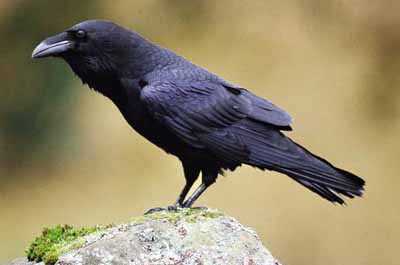
A Raven.   Because I like to fly—I’m a pilot—and I like Poe. 

Best writing tip you've ever received.  

My first creative writing teacher in college often told me that writing was rewriting.  It’s more work than it is anything else.  Words don’t magically appear on the paper (or screen) or flow through the fingertips due to the inspiration of Muses.  I think as long as writers remember that, they can avoid a lot of frustration.

And finally, when will you visit Australia? I need to get a signed book! 

As soon as one of my books becomes a Number 1 bestseller Down Under, I’ll book tickets.  Promise.

Hank Schwaeble, thanks for stopping by! 

My pleasure.  Thanks for having me.

You can find out more about Hank's work by clicking on the following links: 


Also, keep an eye out for pre-order details for The Angel of the Abyss by following Cohesion Press on their Facebook or Twitter. You can also visit Hank's site for news. 

Again, I implore you all to go out now and buy Hank's work. It is truly brilliant. 

Until next time... be nice to each other, and keep on reading. 

Matt

Friday, 20 May 2016

Review - American Nocturne by Hank Schwaeble

One of the greatest pleasures I have as a reader and reviewer is when I discover someone new. Someone whose work not only whittles its way into my head, but also lays eggs and starts to take over my brain. 

You don't often come across writers like that. But, after finishing American Nocturne, I can safely say this. Schwaeble is the real deal... and American Nocturne is one of the most impressive collections of dark fiction I've read in years. 

I have to admit that I was initially hesitant to read this collection. My hectic reading schedule aside, I had never come across Schwaeble's work before, and I wasn't sure if it was going to be for me. How very wrong I was. After five pages I was intrigued. After ten pages I was hooked. The opening story "American Nocturne" floored me with its dark and smokey tones, and left me yearning for more immediately. 

Yes... yearning. 

What followed was a hell of an adventure that took me to a myriad of dark and weird places that I never imagined could be tapped by a storyteller. But damn, Schwaeble taps them. From a high class call girl talked into a very unusual liaison ("Bone Daddy") through to an underworld figure utilising a very effective way of making his enemies disappear without a trace ("Mugwumps"), Schwaeble stunned and enthralled me with his unique exploration of dark ideas and tones in this collection. My mouth literally hit the floor when I got my head around some of the concepts and themes that Schwaeble was playing with in his stories. Within American Nocturne you will find reinterpretations of old legends ("Gomorrah"), a new take on a serial killer ("Midnight Bogey Blues"), academic rivalry over the nature versus nurture debate taken to extreme lengths ("Nurture"), and a blistering take down of the trope of pure hearted characters beating evil ("Phantom Hill"). 

However, what is even more impressive is what Schwaeble is actually able to achieve within the short story format. Each tale in this collection is written with an expert hand, and each unfolds wonderfully  well with all the thrills and spills you'd expect from someone who clearly delights at writing short form fiction. The depth that Schwaeble is also able to convey with each story is astounding. The characters are all layered, sympathetic, and fascinating in each and every tale, and the pacing and execution unencumbered no matter what the genre or time period. 

And fuck me... the twists! 

I could literally write an entire doctoral thesis on Schwaeble's ability to turn a story on its head with just one line. "Cold Service" epitomises this. Starting out with a young woman on the trail of a serial killer, Schwaeble flips the story towards the end and unleashes mind numbing insanity that still has me completely baffled (and also delighted). I re-read this particular story a few times... and it still fries my circuitry when I mull on just what Schwaeble did with it. 

Some readers may find the 'open' nature of Schwaeble's storytelling frustrating (most of the stories in this collection don't have definitive endings), but for me it wasn't an issue. In fact I think that's the point Schwaeble is trying to make. There are no anchor points to latch onto in the worlds of Schwaeble... no certainty in the darkness... just stories that terrify and stay with you for a long time afterwards. 

American Nocturne left me reeling like an overweight amateur boxer taking on Joe Frazier in his prime... and to this day I still find myself staring off into nothingness as my mind ponders the brilliance of Schwaeble's writing and dark storytelling. 

American Nocturne is one of the most impressive collections I have ever read. Exciting, thrilling, and completely enthralling... this collection will claw its way into your soul and refuse to budge.

Highly recommended. 

5 out of 5 stars. 

You can find out more (including purchase details) about American Nocturne here

Saturday, 14 May 2016

Review - Last Year, When We Were Young by Andrew J. McKiernan

I have read some amazing collections this year.

Works by Laird Barron, Hank Schwaeble, and Clive Barker... to name just a few. 

So when I say that McKiernan's collection Last Year, When We Were Young ranks alongside those previous books I don't say it lightly. Last Year, When We Were Young was one of my favourite reads of the year so far, and its stories are still haunting me weeks after I finished it. 

Collecting all of McKiernan's previous short work, Last Year, When We Were Young is one of the most impressive collections I have ever read. 

Period. 

From the opening story (The Memory of Water) through to the last (Last Year, When We Were Young) McKiernan draws you into a series of tales that not only deal with the absurd and the horrific, but also the notions of deep loss and grief. And it works. It works so well in fact that it's still haunting me weeks later. 

So what did I love about this collection? Where do I even start? 

One of the things that floored me reading through this collection was McKiernan's width and breadth as a writer. He is never limited or bound by convention in this book, and he openly explores paths that I would never have considered possible with his story telling. Take, for example, his tale "All the Clowns in Clowntown". Never in my wildest dreams did I imagine that I would read a story about the last surviving resistance members of a clown counter revolution. And never did I imagine that such a story would work. But fuck me, it does. McKiernan also embraces old school horror, weird survivalism, the grotesque, and tragedy throughout this book, and seamlessly shifts from locations such as urban cities right through to the hot and dusty desert. And his use of prose is, to put it bluntly, magical. 

McKiernan has a vivid and haunting way with words that is very reminiscent of writers such as King (in his early days) and McCarthy. He never overplays his hand, but as you read you are slowly drawn into his dark visions so deeply that they resonates with you for a long time afterwards. The title story (Last Year, When We Were Young) highlights this by starting out as a seemingly innocent tale about teenagers and moving quickly to a world dying due to a mysterious virus that ages their bodies rapidly. 

McKiernan's characterisation is also impressive. Every protagonist is believable, fascinating, and darkly layered. You cannot help but relate to them from the get go, and as each tale unfolds you find yourself moving through a wide range of emotions (joy, grief, anger, and hopelessness to name just a few). This is yet another reason why this book is masterful. No two stories are the same, but all are intrinsically linked to each other by an exploration of defining human emotions. Whether he is telling a gothic tale, or exploring a meteorite that is not all that it appears to be, McKiernan's words send you on a cathartic exploration of yourself and all those around you. 

The pacing is seamless, and every story strong and worthy of inclusion in this collection. Last Year, When We Were Young never stumbles, and kept me enthralled (and emotionally drained) from start to finish. I cannot find any faults with it. I literally adored this collection, and find it criminal that McKiernan's work is not as well known as it should be outside of Australia. 

If you want to read a riveting collection of stories that cover a wide range of topics and styles. Buy this book. 

If you want to be taken on a journey that will be cathartic to your soul. Buy this book. 

If you want to see a wordsmith delight, horrify, and grip you in ways you never thought possible. Buy this book. 

Actually... just buy this book. 

Original, entertaining, and stirring, Last Year, When We Were Young is one of the most powerful collection of stories I've ever read. McKiernan mines the dark veins of the human soul on every single page, leaving you both moved and disturbed at the same time. 

Highly recommended for all readers. 

5 out of 5 stars.

You can find out more information, and purchase Last Year, When We Were Young, at the following link