Friday, 26 June 2015

Interview - Peter Newman

Hello Groovers!!

I am excited to be able to bring you another interview with yet another amazing speculative fiction writer! Peter Newman smashed his way onto the speculative fiction scene earlier this year following the release of his much anticipated debut novel The Vagrant. Writing with vision and creativity, The Vagrant stormed its way up our listings of favourite books and firmly remains at good odds to take out our Book of 2015 award. Pete was kind enough to take time out of his busy schedule to sit down with me and chat about various things such as writing, gaming, and the infamous Goat! Enjoy!

Peter Newman, welcome to Smash Dragons!

First up, tell me about yourself. Who is Peter Newman? 

Peter Newman is a writer who lives in Somerset with his wife and son. He also works as a trainer and Firewalking Instructor. He sometimes pretends to be a butler for the Tea and Jeopardy podcast, which he co-writes, and which has been shortlisted for a Hugo Award.
Why did you start writing? Was it for the fast cars, piles of cash, or recreational drugs? 

I’ve always been telling stories in one way or another. As a child it was via the medium of my toys, as a teenager (and beyond!) it was through role playing games, and now it’s through writing. From the options above I’d say it was the drugs that lured me into writing because writing is a drug. It gives you wild highs and dangerous lows, can isolate you from your friends and make you neglect personal hygiene. It’s also really good fun and, unlike most other drugs, you get something to keep at the end.

Your fantasy debut, entitled The Vagrant, came out earlier this year. We here at Smash Dragons adored (and still do) it. I’m curious, how does it feel now to see your book sitting on the shelves as opposed to when it first came out?

It’s wonderful!  It’s scary too, but mostly wonderful and nothing beats going online to find that someone has sent you a nice message about your book. One of the nicest things about it being out in the world now is that my son gets excited if he finds my book or one of Emma’s in a bookshop.

And thank you for the review, it really does mean the world to me that people enjoy my work.

What was the inspiration behind The Vagrant?  Did he suddenly just appear in your minds eye one day, or was it a long period of evolution?

He pretty much turned up without warning. It was weird actually, as it forced me to excavate the story around him as I went. Various things become clear very quickly (like the end point of the story and major arcs) but at the very, very beginning, it was just a man and a baby in New Horizon.

What were the most challenging aspects of getting The Vagrant finished? Were there days where you contemplated throwing in the towel? 

It was a very slow book to write and it’s frustrating to spend hours on something and only get down a thousand words where I might normally write two or three in the same slot. It never once occurred to me to stop writing it, I think because I always knew where I was going.

I was fascinated by the world you created in The Vagrant. Tell me, where did you draw your ideas from when building the universe for the book? 

Thank you! The world crawled out of the dark recesses of my brain and I think came from a mulch of games and books I’d enjoyed growing up. There’s definitely a bit of Warhammer in there, a bit of Final Fantasy, a bit of Seven Samurai and bits and bobs from myth as well. If drunk and pressed, I might admit to a tiny bit of Thundercats as well.

The hero of your book (apart from the titular Vagrant) is arguably the Goat. Will she return for the sequel? And will there ever be an Order of the Sacred Goat to stand proudly alongside the Order of the Sacred Teacup?  

Personally, I love the Goat, and while I’d certainly say she’s important, possibly even one of the protagonists, I’m not sure she’s very heroic! I’m always wary of spoilers but I will say that goats feature in the sequel. Unfortunately I don’t have time to start an Order of the Sacred Goat but that’s a lovely idea. I’d be happy to support it if anyone else wanted to make it a thing though.
  
Take me through a day of writing with Peter Newman. Do you plan or pants it? 

I usually have a chat with Emma (my wife) over coffee about what I’m planning to do. When it comes time to write, I’ll already know the start of the book, the (rough) end of the book and anything from one to three scenes ahead of where I am. Then I’ll go into my writing cave, put on some music and get going. I like to pick an album for each book as it helps get me back into that headspace. For The Vagrant it was the Mass Effect 3 soundtrack.

Can you give us an update on how the sequel to The Vagrant is going? 

Happily. It’s written and I’m working on edits at the moment. Really excited about it!

Why fantasy? What is it about the genre that just gets your juices going day in day out? 

For me, fantasy is all about the characters and their journeys. Good fantasy goes deep I think. Like life but with dragons and swords and better special effects.

You mentioned that fantasy is all about the characters and their journey. In your opinion, what makes a good character? 

Now that’s a question! We could write essays or run panels around that one. But, for me, a good character is one that feels real and engages the reader. It may be we’re rooting for them, it may be that we hate them but either way, they’re compelling. For the former, see any of Robin Hobb’s characters. For the latter, see any of Joe Abercrombie’s.

Who would be your favourite fantasy character then?

Yikes! Where to start with that one? I love too many of them to have a favourite but here’s a few off the top of my head (in no particular order):

1) Iroh (from Avatar: the Legend of Aang)
2) The Fool (From Robin Hobb’s Farseer Trilogy)
3) Nighteyes (From the same)
4) Corwin (From Zelazny’s Amber series)
5) Tyrion (From George Martin’s ASOIAF)
6) Hester (From Philip Reeves Mortal Engines quartet)

You also happen to write for (and appear on) the amazing podcast Tea and Jeopardy (link). Tell me about the show, and what inspired your partner (the lovely Emma Newman) to get it off the ground? 

Tea and Jeopardy is part interview, part audio drama, with a good measure of silly thrown in. Each episode a wonderful and interesting person turns up to the Tea Lair and takes tea and cake with Emma. We usually have novelists on but we’ve also had agents, editors, people who write for TV and eccentric steampunk professors. The Tea lair is different every time, one episode might be in a volcano, the next in a spaceship, the next inside a giant robot, and so on. After the interview, the guest usually faces some kind of peril that they have to escape from, often instigated in part by the butler, Latimer. There are also singing chickens.

A desire to see more women podcasting was the thing that first got Emma thinking about it. There are a lot of good podcasts out there but at the time it felt that most of them were very serious, analytical, worthy things. We didn’t feel we had a lot to add there so we decided to go for something light and a bit silly instead.

Who would win in a cage match between yourself and Latimer? Who would your partner support if she were ringside? 

Latimer. I’m rubbish in a fight unless it’s to defend a plate of chips. I’d like to think Emma would support me. To be honest, I’d be counting on her for a rescue.

If you could sit down with three other authors for the day to pick their brains who would they be and why? 

Ohh, good question. Hmm. I’d go for:

1) Roger Zelazny. That man was a genius! I loved the way he combined such incredibly imaginative worlds and concepts with really fast paced action.

2) Robin Hobb. From her I’d want to learn about the artful way she balances tension in her books and how she creates such nuanced characters. I’d also want to fanboy at her.

3) Neil Gaiman. His stories are somehow both personal and mythical. I’d definitely be wanting a bit of that.

Everyone always asks about what your favourite book is. Lets shake things up a little. What would be your LEAST favourite book that you have read in recent years?  

I’m afraid I only answer questions like that in the pub!

You are a passionate gamer and role player. I’m curious; apart from D&D what other tabletop and role-playing games are you a fan of? 

I have really enjoyed playing: Warhammer, Gurps - Supers, Exalted, Amber, Star Wars, Hunter, Vampire, Champions, and various custom systems. D&D 5e is a beautiful thing in my opinion. Although I’d add that my love of those games is as much down to the skills of the GM and the atmosphere made by the players as it was to each particular system.

I have to ask, how is your Paladin (and the campaign) going? Can you give us a loose update on his adventures?

The campaign is wonderful! Astonishingly talented GM, very good players. We have a lot of fun and the party is always either effective or hilarious. We’re currently on the brink of a final epic attempt to save the world. My Paladin is doing okay. He’s not the brightest fellow, nor the most selfless, but he’s improving with age.

Best tabletop gaming experience?

It’s hard to answer this without being very boring as I think you kind of have to be there to appreciate it…

But!

I once played in an Amber game run by the most amazing friend of mine (hi Dan!). I loved the pants off that game! It ran for years and the characters and plots were incredible. His ability to stick a knife in my character’s heart and then twist it regularly, coupled with his ability to make me (as a player) feel cool and epic were a powerful combo.

Hypothetical question… if you were a character in your book how long do you think you would survive for? 

Depends where I was in the world. If I started in the same place as The Vagrant does in Chapter One, I’d say about thirty to forty minutes.

Complete the following statements:

Tea is better than coffee because…

… Latimer said so and he’s standing right behind me and I think he’s got something sharp on that tray, send help!

When I am Emperor of the Earth I will rule with…

… chocolate and ice cream.

When I think of Australia I picture… 

… Middle Earth with more sunshine and bigger spiders.

What’s next for you? Do we live in false hope that you will someday grace our fair (and by fair I mean incredibly dangerous, and filled with things that wish to hunt you for sport) shores for a visit?

I’ve never been to Australia before and I’d love to go there one day. No plans at the moment but if the chance ever came up I’d grab it with both hands.

Finally, best tip for aspiring writers out there? 

Write, write and write some more, and when you’re waiting to hear back from test readers, or potential agents or publishers, keep writing.

Peter Newman, thank you for talking to Smash Dragons! 

You can find out more about Pete, The Vagrant, and his lovely partner Emma and her amazing podcast by clicking below. I would implore you all to go and buy The Vagrant right now... it is that good! 

Oh and stop by the Tea and Jeopardy page.. it is one of the best podcasts I've listened to... ever. If you like what you hear then go that one step further by becoming a patron of it. I know I will be in the near future!

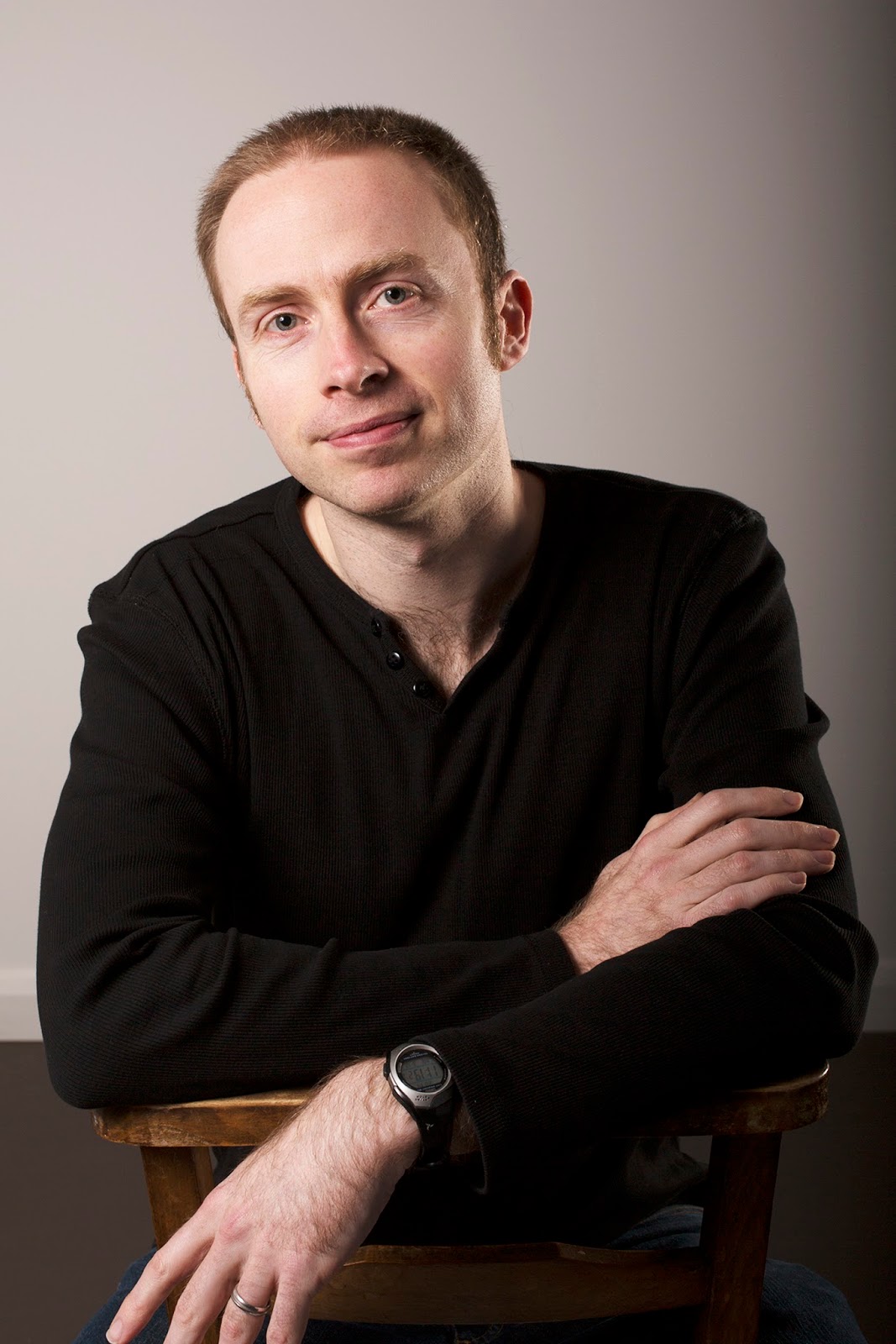
Thanks must also go to Lou Abercrombie too, for the wonderful picture of Pete at the start of this interview. You can find her website here


Until next time peeps... be nice to each other, and keep on reading!

Monday, 15 June 2015

Interview - Stephen Aryan

Hello Peeps!

I am delighted to be able to bring you another feature interview here at Smash Dragons. This week I had the immense privilege to be able to chat with writer, blogger, and game designer Stephen Aryan.

Stephen's fantasy novel, Battlemage, is out later this year from Orbit, and it is already generating a lot buzz and excitement around the community. Enjoy!

Stephen Aryan, welcome to Smash Dragons!

First up, tell us a little bit about yourself and your upcoming debut Battlemage.

I’m from the north east of England, but have lived in Yorkshire for about the last ten years. I live with my partner and two cats. I like real ale, I have a massive sweet tooth, I love genre TV, films and comics. For just over a year I’ve been trying to become an archer just in case The Walking Dead turns out to be a documentary, that way I stand a chance of surviving beyond the first week.

Battlemage is an epic fantasy story that is all about power. It follows the lives of three distinct groups of characters during the unfolding of a war. The warriors on the front lines, the Battlemages who are the magic users, and the leaders of the defending nation. The story includes magical battles, lots of fighting in the mud with swords, espionage and spy games, politics, religion and humour as well.

Why did you start writing? What motivated you to write this particular story? 

I love stories. I love the power they have to transport you to other worlds and times and that they’re limited only by the writer’s imagination. You can create anything and go anywhere and do anything in a story. I’ve always enjoyed writing stories and at an early age I declared to my parents that I was going to be a writer. They smiled and nodded, and told me to eat vegetables. I’ve been writing in various formats for years.

This is about my eighth or ninth novel. This story was one I wrote because I just really wanted to see what happened. It was an idea that wouldn’t go away and kept bugging me, so eventually I had to get it out of my head and onto the page. Years ago I wrote a short story about a mature wizard called Balfruss who was at the end of this career and he went on a final quest with an old friend. It was done as a sort of homage to Legend by David Gemmell and his character, Druss. After writing the short story I wondered what had led the wizard up to that moment and pondered about his early adventures as a younger man and eventually that led me to Battlemage.

I’m guessing, based on the title, that magic and magic users will play a central role in this book? What can you tell us about this? Is there a magical system with rules in your story or is it more mysterious in nature? 

Magic certainly plays a part in the story, but it is only one part of the overall picture. The changes to how people perceive magic and where it is going is one of the main foundations of the Age of Darkness trilogy (see German cover of Battlemage opposite)

Several of the characters on both sides of the war can wield magic. In this world magic users are a dying breed, because although children all over the world are being born with the gift, the system that was in place to train them has broken down. If someone isn’t shown how to control it magic can be quite unstable and explosive. This results in accidents that hurt people, unexpected deaths and a growing fear of magic because it seems so unpredictable and dangerous.

I spent quite a bit of time thinking about the magical system and I wanted to make it both very simple and logical. There are limits to what a person can do with it, and those who wield magic have particular strengths. No one is good at everything. A magic user can’t just wave their hands and do absolutely anything. Equally they can’t just keep using magic without it having a toll. So there is a physical and mental cost to using magic. The actual magical system is fairly traditional in some ways, but I’ve hopefully introduced a few new quirks.

Why fantasy? What is it about that genre that you find appealing? 

It’s my favourite genre. I’ve read fantasy books my entire life and I love that you can tell any kind of story you want, within a fantasy framework, and it will still be labelled as fantasy. Working in marketing and from a practical standpoint I understand why. When someone walks into a bookshop they kind of know what to expect and where to find a particular kind of book, but the scope within fantasy itself is vast. It is a genre full of imagination and wonder.

What challenges did you face in getting Battlemage off the ground?

In terms of writing it, I think a lot of writers dislike their book at some point during the process and for me this is usually at the usual point of no return. This is where I think the story is good, but I’m not sure, but I’ve gone too far to stop, so I press on to the end and hope it all makes sense. Thankfully when I looked back I was reasonably happy, but could immediately see a number of things that needed work. Then I spent quite a bit of time revising and editing it, which is also a normal part of the process.

As a writer do you prefer to plant a seed and see where the story takes you, or do you design and plan out where it will eventually lead and write from there? 

Once I tried writing by the seat of my pants and I just went with the story. It was awful. Really awful. That novel will never be shown to anyone ever! I plan the main beats or milestones of the story, and I also know the start, middle and end of the story. The joy for me comes in the exploration of how I get from point C to point D in the story. So as I write there is always some flex and some surprises, even for me, along the way.

Where did the inspiration for Battlemage come from?

That’s a tough one to pinpoint. A little came from the short story I mentioned, but also from just wanting to explore the lives of the other characters I’d been working on in my head. Also the structure of the world and what had happened in the past set certain events in motion. I also wanted to write a story where magic was not something in the shadows, which I’ve seen in quite a lot of modern fantasy novels. In Battlemage magic is not sleight of hand or misdirection. It’s people pulling down lightning from the sky. It’s real, it’s incredible power and very dangerous in the wrong hands.

I also wanted a story with non-human races in it. These are people that don’t think or act like us. There used to be a lot more of this in fantasy novels as well, but less so recently. All of this, plus lots of other stuff, fermented in the back of my brain over several years and that inspired the story.

Tell me more about the non-human races in Battlemage. Did you create some unique species for it or did you draw from more familiar races such as Elves? 

I have created something new and over the course of the trilogy I explore some of them in detail. I have tried to show how others perceive them, how there are stereotypes for and against, and how they perceive themselves and, of course, what they think about humans.

Who are your literary influences? Why? 

There are lots of writers who have influenced me over the years. Too many to list, and if I tried to name all of them I would miss someone out and feel guilty, but my biggest influence is undoubtedly David Gemmell. His fantasy novels are both simple and complex with characters that are incredibly flawed and very human. 

His books have heart and while not every book has to be about something, and it can just be a fun adventure, almost all of his had an underlying message. Perhaps that’s why those books have stuck with me longer than many others over the years. There are other writers who are better wordsmiths, but in my opinion he never set out to do that. He just wanted to tell good stories and create interesting characters and I try to do the same. As Stephen King said (who is another big influence actually) in his On Writing book, use the first word that comes into your mind, if it’s appropriate, and don’t go to the thesaurus. So I take a leaf out of his book as well and try to make it simple and easy to read.

If you could pick one magical power to have what would it be, and why? 

Oooh, this is like invisibility or fly, where someone has to pick one superpower. It’s so difficult! I’d go for some kind of power over metals like Magneto, so I could take over the world….or just bend spoons with my mind and freak people out.

You mentioned earlier that there were physical and mental consequences when using magic over a long period of time. What are they?

Long term usage of magic can kill, and every mage has their limit. They can only channel so much energy, people have different strengths, and if they try to push themselves too hard for too long, it will kill them. Wielding huge amounts of power every day is also physically taxing and there again it starts to eat away at a personally physically and they will wither away if they don't rest. The mental consequences are explored a little in Battlemage so I won't give too much away.

Tell me about the world that Battlemage is set in. War seems to be quite a common occurrence in it? 

Hmm, not really. There have been conflicts in the past, but never on such a grand scale as this. The conflict in Battlemage is in essence a first world war, and even then, other parts of the world are mentioned that have not been drawn into the conflict. Even so the war is fairly widespread and the repercussions will be long lasting. Predominantly the story takes place in two main locations and we see the impact of the war on both places throughout the story.

You have a background that includes not only writing, but also podcasting, reviewing, and game design. Where do you find the time to write a novel amidst all of this? 

Don’t forget the day job too! It all comes down to priorities. If you really love doing something, you will find the time to do it by not doing something else. I love MMORPGs and have been playing them since the first days of Everquest. Before that I’ve been playing computer games on various platforms since the days of the ZX Spectrum 81.

There are a lot of games I would really like to be playing right now, but I’ve stopped myself from buying them otherwise I would get sucked in and disappear down a rabbit hole. Then six months would go by and I’d wonder why I was still on page 3 of the latest novel. I call myself a lapsed gamer because I only dabble a little now and then.

Podcasting is a great way to discuss things in geek culture and it’s allowed me to connect to a wide range of people all over the world with similar interests. It’s a great way to unwind and now that the editing doesn’t take me hours like it used to, it doesn’t take up that much time. I used to run a book review blog and do reviews for various websites like Tor.com but I stopped doing all of that a few years ago to have more time for writing. 

How has your love of comics helped shape you as a writer? Did you draw on anything in particular when writing Battlemage?

It didn’t shape me when writing Battlemage but I also write comics, so reading them over the years has definitely helped with that. Doing both has revealed there are parallels between the two, because writing a novel starts as a solitary thing but quickly it becomes a team effort, with your agent and your editor, then the copy editor and so on. With a comic book there are usually two storytellers, the artist and the writer, then there’s the colourist and letterer, and sometimes a designer, so it’s definitely a team effort as well.

Tell me a random fact about yourself. 

Nine times out of ten I’m the tallest person in a room. If it’s not me, then it’s James Smythe or David Towsey.

Hypothetical question. The end of days is upon us, and death stalks the land. You can save only one book from your collection to preserve for future generations. What would it be, and why? 

That’s a hard question! Probably my battered old paperback copy of Dune. It’s one of my favourite books. It is an incredible work of fiction. The story is brilliant and it’s jammed packed with so much stuff it isn’t surprising to me that it spawned several sequels (which I think diminish in quality), prequels written by Herbert’s son and Kevin J. Anderson, one film and a couple of really good TV series.

Batman or Superman? Why?

As much as I like Superman, as a symbol of hope and his story, it has to be Batman every single time. He’s always five steps ahead of everyone and even when he’s in a room, part of his mind is elsewhere thinking stuff through. He has no superpowers at all and yet he is a member of the Justice League and rightly so. He can go toe to toe with any of them and has beaten most of them in the past.

What is your take on the genre at the moment? Do you think it is flourishing or stagnating?

I think it’s flourishing. There are so many amazing new writers coming out all the time, some of whom you’ve spoken to, like Jen Williams. When I was growing up there was far less content, TV, films, books and comics, now there is so much I can’t keep up with all of the fantasy writers, never mind anything else.

Who would win in a cage match between Balfruss and Druss? 

Well, that would be a short fight, as Balfruss has magic. But, if it was a fight between Vargus and Druss then that would be a more even match. I wouldn’t like to put any money on that fight!

If you could pick the brain of one author (dead or alive) for a day who would it be and why? 

Stephen King. I am a big fan of his work and one of my favourite novels is The Green Mile. He never plans his novels and has written about his process and how he sees it as uncovering a fossil. I think he would be a fascinating guy to spend a day with.

What are you working on right now? 

I’m currently working on the first draft of book 3 in the Age of Darkness trilogy. Book 2 is back with my editor for her feedback, so right now I’m just focused on book 3 and there are a couple of comic book projects ticking along.

Standard cliché question… best writing tip? 

Finish the book. Put your bum in the chair and finish the book. Get it done, then you can come back and edit it, rip it to pieces and sew it all back together again. Don’t stop to do big edits along the way. Find whatever technique or tricks work to keep you moving forward and, as Shia LeBeouf says in his bonkers internet video – DO IT!

And finally, can we expect to see you at any events or conventions later this year? 

I’m at Nine Worlds in August in London, and Fantasycon in October in Nottingham. In September there will be a launch for Battlemage, most likely in London, but I’ll post more information about that when I have it.

Stephen Aryan, thanks for chatting to Smash Dragons!

Battlemage will be out in late September 2015. You can keep track of Stephen via his website and social media outlets such as twitter. Trust me everyone... this one is going to be amazing! 

Until next time, be nice to each other, and keep on reading!

Matt

Thursday, 11 June 2015

Interview - Thoraiya Dyer

Hello Everyone! 

I am delighted to once again bring you another interview from our ever-present series focusing on local speculative fiction writers. This week I had the great pleasure of chatting with  the wonderful and incredibly friendly Thoraiya Dyer. 

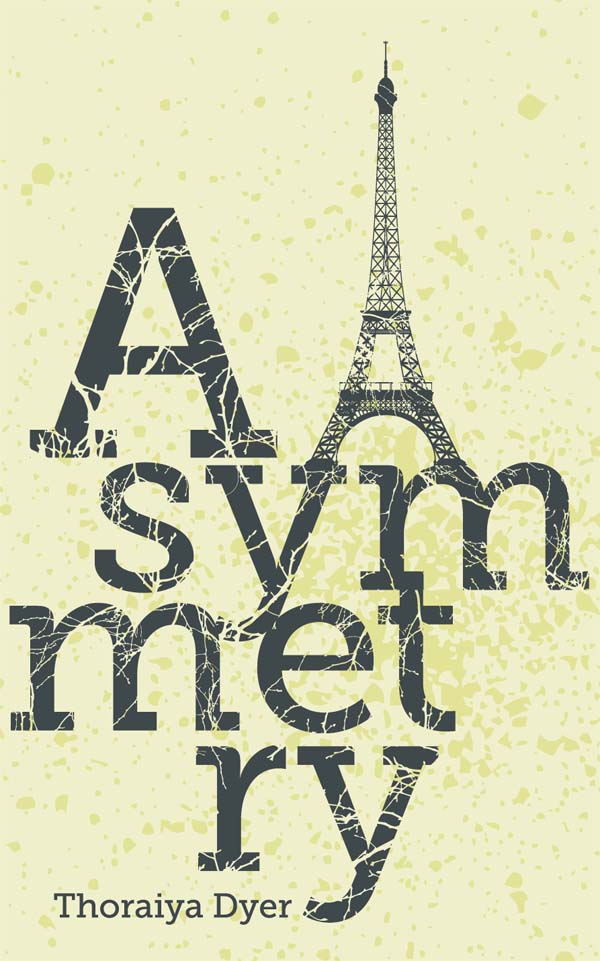
Dyer, for those of you who live in a cave, is the 4-time Aurealis Award winning and 3-time Ditmar Award winning writer of titles that have appeared in magazines such as Clarkesworld, Cosmos and Apex. Her collection of four original stories, entitled Asymmetry, is available now from Twelfth Planet Press. Her debut fantasy novel, entitled Canopy, is forthcoming from Tor books. 

Thoraiya Dyer, welcome to Smash Dragons!

Thank you!

First up, tell me about yourself. Who is Thoraiya Dyer

I am (you are, we are) Australian, I live in Sydney, I qualified as a veterinarian but I live in a pet-free unit at the moment, which is torture, and I like to pretend that the bush turkey that roosts in the tree outside is my sort-of pet?

Why did you start writing? Was it something you always envisaged yourself doing when you were young?

Kids all write stories! The real question is, why do some people stop? 

At first, like many other readers of Enid Blyton’s Magic Wishing Chair, I assumed authors were dead. But as soon as I found out that some were alive (yes, Roald Dahl was still alive at that point!) the envisaging commenced.

Do you remember that moment when you first were introduced to speculative fiction? For example I still remember my neighbour lending me a battered copy of the Hobbit as a kid. I was sold from that moment on!

That’s cool about your neighbour! But, no, my mother is a die-hard SFF fan and the books have always been in the house. I remember finding one with a cool frog-man on the front when I was, like, 7 years old. 

“What’s this thing?” I asked her.

“Oh, it’s a gowachin!” she reckons. Like that’s a normal thing for people to talk about. 

“Can I read it?”

“If you can understand it, you can read it.”

Turns out, I couldn’t understand it. It was Frank Herbert’s “Dosadi Experiment,” right? But that was the rule in our house. If you could understand it, you could read it. I read A Wizard of Earthsea and Asimov’s robot stories well before I could understand Frank Herbert.

Your work covers a wonderful range of topics, genres, and formats. I’m curious; do you have a preferred format (short story, novella, or novel) and genre (SF or F)? Why?

I have no preference and I love writing them all.

For someone (such as me!) who is new to your work what would be the best place to start? 

Well, you should start by thinking about your own preferences. If you like science fiction, you should read The Wisdom of Ants at Clarkesworld, or buy “Insert Title Here” from Fablecroft and read my story about future falcon racing. If you like fantasy, you should get “Sprawl” from Twelfth Planet and read my yowie story, or get “After The Storm” and read my Nepal story, and if you like them mixed in together, try my first story at Apex, The Second Card of the Major Arcana, which was about a sphinx and reprinted in “the Mammoth Book of Science Fiction by Women.”


Or, you know. I have a longer story about pirates, The Company Articles of Edward Teach. YARR!  If you like novels exclusively, you should wait for my first novel, (title now changed to) “Crossroads of Canopy.” 

In your opinion, what is so appealing about writing speculative fiction? 

Freedom...and sneakiness.

Freedom to invent whatever you want.

Sneakiness when it comes to showing people aspects of themselves they might not see in a more faithful mirror.

Where do you draw your inspiration from when writing? 

The whole world ☺

What are your best and worst qualities as a writer? 

My best quality, or at least what I strive for, is to be slightly different yet still readable.

My worst quality is I’m a perfectionist...kidding! My worst quality is the inadequacy of my elevator pitch.

If you could pick the brain of one author (dead or alive) for a day who would it be and why? 

Well, it might end up being useless because I can’t speak Russian, but I’d have a few questions for Fyodor Dostoyevsky. They didn’t have blog interviews back in his day, unfortunately. I just want to know if the things that moved me most in his books were things that he put there, or things that I brought to the table.

Hypothetical question. If you were randomly selected as a member of the first Mars colonization mission what three books (only three due to cargo restrictions) would you take? Why?

I’d have to take mine, wouldn’t I? I haven’t done the edits yet!

I’ve read that you have a passion for archery. How did you come to be involved in this? And does it help you at all when it comes to writing?  

I’d always wanted to give archery a go, but it wasn’t until I was a real grown up with my own job and car that it was possible. I knew I wanted to shoot targets, not animals, so it was a matter of looking up my closest Archery NSW-affiliated club.

I haven’t written an archery book yet, so I can’t say it has directly helped my writing. But I found a husband! Yeah, just lying around at the club! And he helps me immensely ☺

You recently signed a three-book deal with Tor for your Titan’s Forest trilogy. Firstly, congratulations! Secondly, what can you tell us about this trilogy? Any snippets to get us excited?

Thank you! I can tell you what I wrote in my inadequate elevator pitch, which is that it’s an epic fantasy trilogy set in a rainforest of titanic proportions, with the different countries stretching vertically instead of horizontally, and their borders invisibly guarded by the gods.

(I can’t give you any snippets until I get back from Mars with those edits, sorry :D)

Why did you write a fantasy series set in a rainforest? What was it about that setting that appealed to you the most, and what can you tell me about the rainforest in the Titan’s Forest books?

I wrote a fantasy series set in a rainforest because of elven bread.

Bread is made from grain crops, which grow in fields, which are the complete opposite to a faerie forest. And yet most elves in fantasy novels had yew bows, and lived in oak trees, but yew berries are poison and acorns taste disgusting, and wouldn’t magical tree-dwellers be happier eating passionfruit and mangoes?

Titan’s forest is different to a real-world rainforest not only in terms of size (real rainforest emergents don’t reach 1400m) but in terms of how I’ve stolen my favourite rainforest trees from all around the world.

Did you draw inspiration from Australian flora and fauna when writing it? Can you give us some examples? 

Yes! Examples: One of my dastardly demons, the only one that’s out and about by daylight, bears a suspicious resemblance to a giant, megafaunal goanna. Then there’s the temples of the goddesses and gods. They might be located in something you’d traditionally expect to be priestly, like a fig or a camphor tree, or they might be in trees more familiar to Aussies, like tallowwoods or flooded gums.

Based on the titles for the three books (Canopy, Understory, and Floor) I’m assuming you will be jumping from one level to another in regards to the rainforest?  

That’s the plan.

How did it feel to sell a series to arguably one of the biggest speculative fiction players internationally? Can you take me through the process leading up to selling it? 

It felt surreal. It still does.

The process was via my wonder-agent, Evan Gregory. 

You have won a number of awards here in Australia for your work (3 Ditmars and 4 Aurealis Awards). I’m curious, was there one in particular that stands out? Why? 

The Ditmar Award I won for “The Company Articles of Edward Teach” at Swancon in 2011. Juliet Marillier, one of my favourite authors and now a friend, was there to congratulate me. Paul Haines, whom I’d pipped at the post, beating his amazing story, “Her Gallant Needs,” was witty and gracious in defeat. I miss him. And my very cute 3yo daughter was excited to come up on stage with me. She can’t remember but I remember her glowing with excitement.

What is your take on the state of Australian speculative fiction at the moment? How does it compare to the international scene? 

My take? How many thousand words would you like this essay to be?? I think it’s in a great place, although maybe not in the state of frenzy it was in just after Aussiecon 4. If you mean how does it compare internationally in terms of quality writing, as a reader I think we have the talent here to compete on a world stage. 

If you mean as a writer, in terms of finding an audience, our genre is always going to have a smaller niche as a function of our smaller population here, and if you want to overcome that, well, let’s just say the current governments are not being especially kind to the arts.

Complete the following statements – 

My gladiatorial weapon of choice would be … net and trident

When I’m lining up my bow and arrow at the range I think about… ideally, nothing

My favourite snack when writing is… sliced guavas and a cuppa

I felt like I had made it as a writer when… still don’t

If I had magical powers they would be… invisibility

What are you working on at the moment? 

Book #2

Cliché question… best tip for prospective writers here in Australia? 

Worry about craft first, publishing second; buy Ursula LeGuin’s “Steering the Craft” and do all the exercises in it.

Can we expect to see you at any events or conventions in the near future? 

I’ll be at the NSW Writer’s Centre’s Speculative Fiction festival on the 18th of July, talking about short stories. 

I hope I’ll be at the Brisvegas Natcon next year...and if I get some more short story pocket money I hope to make Conflux 11 in Canberra this year. 

Finally, when can we expect Canopy be released at this stage?

 Early 2017.

Thoraiya Dyer, thank you for taking the time to chat with Smash Dragons!

Thank for having me, Matt! (Can I call you Matt? Hey, where are you going??)


Dyer's stories can all be tracked down online at websites like Booktopia, Twelfth Planet Press, and Amazon. Get in and support a local author people, Dyer is going places fast! I for one cannot wait to see Canopy published. It sounds like it is going to be a truly unique and amazing adventure!

Until next time friends, be nice, and keep on reading!

Matt

Wednesday, 10 June 2015

Do's and Don'ts of Fandom

Well the convention season has well and truly begun, and I've decided to jot down some advice for all of you rabid fans who will flock to events like Supanova this year. We all get a bit star struck at times when we see our favourite authors up close and personal... or interact with them online... but there is a right way... and a very wrong way of going about it. 


So here goes... the Smash Dragons guide for all those nice but socially awkward fans out there! You can thank me later... with beer... and cookies... ok? 

First up... Convention advice.

  1. Do.. always warmly say hello to your favourite authors when you see them at a convention. Don't... run up, invade their personal space, and pant heavily as you take in their awesomeness. Touching their clothes and hair is also not advised. I shit you not I have seen people tug on the beards of male writers before. IT'S NOT FUNNY, OR COOL... GOT IT!?!
  2. Do.. bring a small gift for a writer if they are ok with that sort of thing (newsflash people... it can be uncomfortable for some). Don't build a shrine before them with your sack of gifts. It probably will get uncomfortable if you do.
  3. Do.. respect the fact that they too like to wander around and be fans themselves. Give them the space and opportunity to do so. Don't.. obtain rope, and tie yourself to your favourite author. They might take offence to it, and I suspect security will magically appear if you do. Above all else don't follow them into the toilet. Alan Baxter told me this happened to him at a con... honestly people... who does that?! 
  4. Do.. get a photo with your favourite author if it is an appropriate time and place to do so. Use the grey matter known as your brain when deciding this. When they are eating, chatting to others, or with their family are all not appropriate times. Don't.. demand a selfie, photobomb them, or take pictures without their permission. I cannot emphasise that last point enough. Ask nicely for a photo... if they say yes, great! If they say no, respect that!
  5. Do.. actually talk to them when you meet them. I know it can be hard, but they don't bite. They actually love to hear from their fans, and it warms their hearts to see people enjoying their writing. Don't... stand before them and just stare deeply into their eyes. It's creepy. And uncomfortable. And again security will magically appear and escort you gently (roughly) away. 
  6. Do.. tell them what you loved about their work. Don't... offer an existentialist critique of it. They will lose the will to live hearing it. In fact I'm losing the will to live just thinking about it. 
  7. Do.. be considerate of everyone else who is there to see your favourite author. You ARE NOT their number one fan. There is no such thing. Only fans. Be polite and considerate, especially with kids around. Don't.. shove your way to the front of a line or onto a stage, scream 'WITNESS ME!!', and plonk your books down to be signed. The author has every right to kindly (angrily) tell you to fuck off if you do. 
  8. Do.. acknowledge them if you see them strolling around the convention. A smile and simple greeting will suffice. Don't... giggle and snicker hysterically whilst you hide behind a stall watching them as they walk by. They WILL see you... and they WILL note what you look like for future reference when dealing with you. 
  9. Do.. offer to buy them a drink at the bar if it is something you both have spoken about on social media before. Don't.. expect this transaction to immediately transform you into their best friend. You ARE NOT their best friend. You are the incredibly nice fan who just bought your favourite author (or blogger... hint hint) a drink from the top shelf. Enjoy your drink with them, and move on.
  10. Do.. listen to and observe your favourite author. They are people... and have feelings. If they indicate verbally, or through body language, that they are uncomfortable with a situation then back off. Don't... ignore the feeble protests of your favourite author as they disappear amidst a swarm of fans. Seriously people... use your noggin! How would you feel if a mob surrounded you? 
  11. Finally do.. buy their books and support their hard endeavour to actually make a living out of something they love. Don't.. loudly proclaim how you outsmarted the 'man' by pirating their work. Seriously, I saw this happen at a convention a couple of years back, and it really isn't cool. 


Social Media Advice 
  1. Do.. contact your favourite authors on social media and tell them how much you loved their work. Don't.. sit in front of a computer screen or stare at your phone sobbing when they don't immediately respond. They are very busy you know.. with this thing called a life!
  2. Do.. interact in a friendly and nice manner if/when they do respond. Don't.. send them abusive, controversial, or just plain stupid messages or tweets. And no, they really don't need to know what you just ate for dinner. 
  3. Do.. compliment and engage with them. Talk about books, reading, writing. Things you actually share in common. Don't... try to be too familiar and jovial with them from the start. I will be honest, I have done this before (and I still do at times, much to my embarrassment). They don't know you, and you really don't know them. Meet them in person at a convention or event and see if you hit it off first before you claim them as a friend for life!
  4. Do.. share, link, retweet and promote their work. Word of mouth is important, and shit, your post/tweet/link might mean a few extra sales or interest for your favourite author. Don't.. expect them to personally thank you for every single effort you make to support their work. Most will try, but they are usually very busy. Again, life people.
  5. Finally do.. use social media to get to know your favourite authors and keep up to date on their work. Don't.. use social media to establish where they live, work, and socialise so you can find them or steal their yet to be released book. Your not being a dedicated fan. Your being a stalker and a thief. Enjoy your stay at a correctional facility if you do this. 
I hope this helps peeps!

Matt

Tuesday, 9 June 2015

Interview - Jen Williams

Hello Everyone!

I am delighted to bring you another interview here at Smash Dragons. This week, I had the amazing opportunity to chat with Jen Williams!

For those of you who live in a cave, Jen is a fantasy writer from London who spends much of her time frowning at notebooks in cafes and fiddling with maps of imaginary places. She writes chunky, character-driven fantasy, and is partial to mead, if you're buying. The first two novels in the Copper Cat trilogy, The Copper Promise and The Iron Ghost, are available now. 

Jen Williams, welcome to Smash Dragons!

First up, tell is a bit about yourself, and why you became a writer.

I’m never sure what people would like to hear on this bit, so here are some randomly chosen facts: I’m from south-east London, I live with my partner who writes funny audio stuff, we have a black and white cat called Pyra who was abandoned by the side of a motorway in a cardboard box. I collect Lego, particularly the Lego where the mini-figs tend to come with swords, I am very partial to mead and I have a degree in illustration (those things aren’t related). I very deliberately wear odd socks, I have freckles, and an enormous aversion to broccoli and Adam Sandler films. I think that covers all the important things.

Why did I become a writer? This is a very mysterious question. I wanted to write stories very early on (the first birthday presents I remember asking for were a typewriter and a desk) and much of the time I was just happier when I was making things up in my head. This urge came out in a number of ways – it’s why I studied illustration, I think, since that is largely to do with telling stories with pictures – and eventually in my early twenties I started to write a book to cheer myself up. It was whilst writing my third book I realised that this was what I should have been doing all along, and I abandoned myself to my fate. 

How did The Copper Promise come about? What led you to write that particular story?

Originally it was supposed to have been a fun side project while I took a break from writing other books, which is why the book was split into four parts – I quite liked the idea of publishing it as a serial, something fun and breezy to get my writing out into the world, but it grew into something much bigger than that. 

You initially self published the first part of The Copper Promise before it was picked up by Headline. What made you take this path, and how did it help you later on when Headline came on board? 

I self published the first section as an experiment. I didn’t know an awful lot about the process, but it seemed like an interesting thing to do while I was between writing other books. When Headline picked up the full manuscript, they decided to publish ebook versions of the four original novellas, which meant I did get to see it happen as a serial. 

Take me through a day of writing with Jen Williams. Are you an architect or gardener? Do you have a particular place you like to write? 

I write mostly in the evenings after work, and in big chunks at the weekends. I have a small writing desk in the corner of our bedroom that is liberally festooned with various toys, books, notebooks, post-its, chocolate bar wrappers, Lego figures, and quite often, a cat. It’s a good place to write (when I can find space on the desk) because it’s out of the way and right next to a window, which is useful for the all-important “hopelessly staring at nothing for hours” that writing requires. 

When it comes to my approach to writing, I am a mixture of gardener and architect. I usually start out with two things at the beginning of a book: a very vague plan, and very detailed notes on the main characters. The plan is there for me to keep half an eye on, but usually it will change drastically as I write the first draft; this is because I write character-driven books, and I try to let their personalities guide the direction it’s going in. It’s a bit of cliché to say that they sometimes surprise me, but often the path I had planned for a character will turn out to be wildly inaccurate once I start seeing their voice on the page. 

What is your worst writing habit?

Being longwinded. Editing for me usually means removing a lot of stuff that was fun to write but doesn’t necessarily do anything useful for the story. I like to keep the Copper Cat books moving at a pretty speedy pace, so it’s important that I don’t fill up the book with endless fantasy feasts with meticulously described food, as much as I would enjoy writing that.

Your work has a really fun and enthralling tone to it. Was this something you set out to achieve on purpose, or is it just your natural way of telling a story? 

When I started writing The Copper Promise, fantasy as a genre was in quite a serious place – lots of political intrigue, military campaigns, bad things happening to bad people (and good people). I enjoy those sorts of books, but I wanted to write something that had a completely different atmosphere, something that had the heart of a golden age of sword and sorcery story, but written with modern sensibilities. I wanted to read more books with rogues, and monsters, and magic, so that’s exactly what I wrote. Don’t get me wrong, some dreadful things happen in the books – the very first chapter of The Copper Promise sees a man being tortured after his entire family have been murdered – but I hope there is a sense of hope and optimism, and a few funny lines too.

The Iron Ghost is the much-awaited sequel to The Copper Promise. In 100 words or less can you tell us about it?

It’s cheating slightly but I’ll give you the blurb:

Wydrin of Crosshaven, Sir Sebastian and Lord Aaron Frith are experienced in the perils of stirring up the old gods. They are also familiar with defeating them, and the heroes of Baneswatch are now enjoying the perks of suddenly being very much in demand for their services.

When a job comes up in the distant city of Skaldshollow, it looks like easy coin – retrieve a stolen item, admire the views, get paid. But in a place twisted and haunted by ancient magic, with the most infamous mage of them all, Joah Demonsworn, making a reappearance, our heroes soon find themselves threatened by enemies on all sides, old and new. And in the frozen mountains, the stones are walking…

What challenges did you face in writing The Iron Ghost when compared to The Copper Promise? 

The first book I wrote purely to please myself, at my own pace, in between other things. I had a few short stories out in the world, but otherwise my writing was an unknown factor. By the time I came to write The Iron Ghost, I had an agent, an editor, a contract, a deadline, and a number of people who had read The Copper Promise and rather liked it. All of these things added a pressure that simply wasn’t there when I wrote the first one. Believe me, it’s the best kind of pressure – my book is out in the world and some people are enjoying it – but there is a particular kind of terror that comes with realising you have expectations to meet. Consequently, The Iron Ghost was a more gruelling experience – I fretted more, I started again more than once, I agonized over structure and pacing. In the end though, writing a book is never easy, and it was completely worth the misery, the agony and the lumps chewed out of my desk.

How is The Iron Ghost different to The Copper Promise?

I have taken to describing The Iron Ghost as the Empire Strikes Back of the trilogy, because the tone is noticeably darker, and things are a little bleaker. It’s still chock full of magic, monsters and mayhem, but the stakes have been raised, and the dangers are all a little more personal for my small band of sort-of heroes. It also focuses quite closely on a part of the world they haven’t been to before, with all new dangers and magic.

I absolutely adored the characters in both The Copper Promise and The Iron Ghost, and I loved how you embrace familiar tropes and make them fun again. Do you think writers should spend more time embracing time old themes such as Dragons and Quests? And how do you create and develop your characters? 

I honestly think writers should write whatever makes them happy! Sword and sorcery makes me happy – I love magic and mayhem, personally – but I hope that I’ve written those tropes with an eye on the fact that I’m writing in the 21st century. Reading old school sword and sorcery as a modern reader can sometimes be an uncomfortable experience, so I definitely wanted to drag the genre into a world where women, LGBT people, and people of colour exist and get interesting things to do.

As for developing my characters, I’m not sure that I know how that happens myself. Characters arrive, I listen to them, and then I stick them all in a tavern together and see what happens. If I’m lucky, there will be conflict and change, and new bonds will form. One of the conscious things I do, actually, that I can tell you about in a useful way, is to make sure I know where the characters are from. I feel strongly that the character’s background/home/upbringing has a significant impact on who they are. 
For example, Wydrin wouldn’t be Wydrin if she hadn’t grown up in Crosshaven, which is essentially a sword and sorcery version of Mos Eisley. And similarly, of course Lord Frith would be a very different and possibly less stiff-necked young man if he hadn’t grown up in a castle. 

What it is about fantasy, and in particular sword and sorcery, that you love? 

 Too many things to list! But really I think it comes down to the sheer range of possibilities open to you when you write fantasy – there are so many completely new places to visit, different types of magic to experience. And with its roots deep in mythology, I believe that fantasy is a language that is universal to us all.

The zombie apocalypse is upon us. You have to assemble a crack team of fellow authors to survive in a now very dangerous world. Who do you pick, and why? 

Okay, first of all, Liz de Jager, because she takes no crap from anyone and would be very handy with a blunt instrument. Then Den Patrick, because I suspect that at the end of the world he’s suddenly going to reveal that he’s been a practitioner of the dark arts all along and can probably explode the undead with the power of his mind. 

Who are your literary influences? Why?

I can’t vouch for whether my writing shows any obvious signs of this, but certainly the authors who were a big deal to me as a young person, and continue to be inspirational, were Stephen King, Sir Terry Pratchett and Robin Hobb. To me they really are the crowned monarchs of this writing lark, and I suspect that a lot of what I’ve learnt (the good stuff, anyway) comes from reading lots of their books. What links them particularly, for me, is an approach to character that gets under your skin – I formed lasting attachments to so many of the characters they introduced us to: Roland of Gilead, Nick Andros, Granny Weather Wax, Nanny Ogg, Death, Fitz, the Fool, Wintrow Vestrit…I could go on forever. These are the books that have my heart because the characters mean the world to me.

What is your take on the state of speculative fiction worldwide? What do we need to see more of?

Oh gosh, there are so many interesting books out there at the moment, but I think we could always do with more varied stuff. I want to see fewer books where woman appear to have been forgotten about, and more where people of all backgrounds and persuasions have starring roles. 

Tell me about the Super Relaxed Fantasy Club. This sounds like an awesome initiative! 

Super Relaxed Fantasy Club is a monthly gathering in London, where fans of fantasy and speculative fiction get together to be generally relaxed, hang out and listen to some interesting readings from a pair of guests. Everyone is welcome, it’s free, and it’s a really good excuse to get together and have a gossip, uh, I mean have serious discussions about fantasy books.

Craziest thing a fan has ever said to you in relation to your work?

I don’t think I’ve had anything really crazy, although someone did once tell me that they’d like to stab Lord Frith in the eyes, which I thought was harsh. I love Frith very much.

Complete the following sentences:

My favourite book is… IMPOSSIBLE TO NAME. The Liveship Traders trilogy by Robin Hobb is probably my favourite fantasy series ever. In terms of a single book, it swaps back and forth between Lords and Ladies, American Gods, The Last Unicorn, Under Heaven, We Have Always Lived in the Castle… yeah, I’m not very good at choosing.

My literary arch nemesis is… someone I haven’t met yet, I suspect.

My weapon of choice for fighting my arch nemesis in gladiatorial combat would be… Tigra’s bolo whip from Thundercats. I have been watching a lot of Thundercats lately.

What are you working on right now? 

The first draft of the third book in the Copper Cat trilogy, The Silver Tide, has been handed back to my editor, so at the moment I’m sketching out a plan for the fantasy series that will come next. This stage is always a lot of fun, because nothing is pinned down yet and it could all go in any direction.

Can we expect you to visit Australia anytime soon?

It certainly isn’t in my near future, but I live in hope!

And finally, best/worst writing advice you have ever received? 

The best writing advice for me has always been: ‘just keep writing, and finish the book’. There’s a terrible urge, usually about 60K words into a draft, to abandon the book and start another. This is almost always a terrible idea. Also I think that accepting that writing always takes time – both in the sense of needing to find time for it in your daily life, and in the sense that you will gradually get better over the course of years – is hugely important. Don’t wait around for that magical part of your life where you have loads of free time (it doesn’t exist) and don’t blast out your first book and chuck it straight up onto Amazon for all to see. Determination, and patience, are both essential.

Jen Williams, thank you for talking to Smash Dragons! 

Jen's books are available from all good retailers and online outlets. I implore you all, if you like sword and sorcery, or just fantasy in general, then you need to check out The Copper Promise and The Iron Ghost. You won't be disappointed! 

Until next time peeps... stay frosty... and keep on reading!

Matt

Friday, 5 June 2015

Book Review - Beyond Redemption by Michael R. Fletcher


When belief defines reality, those with the strongest convictions - the crazy, the obsessive, the delusional - have the power to shape the world.

And someone is just mad enough to believe he can create a god...

Violent and dark, the world is filled with the Geisteskranken-men and women whose delusions manifest. Sustained by their own belief - and the beliefs of those around them - they can manipulate their surroundings. For the High Priest Konig, that means creating order out of the chaos in his city-state, leading his believers to focus on one thing: helping a young man, Morgen, ascend to become a god. 

A god they can control.

Trouble is, there are many who would see a god in their thrall, including the High Priest's own doppelgangers, a Slaver no one can resist, and three slaves led by possibly the only sane man left.

As these forces converge on the boy, there's one more obstacle: time is running out. Because as the delusions become more powerful, the also become harder to control. The fate of the Geisteskranken is to inevitably find oneself in the Afterdeath. 

The question, then, is: Who will rule there?

I like being a reviewer. It has many perks, and it enables me to read widely across a genre that I love. One of the downsides however is that I don't often get time to read as many unknown authors as I would usually like. So when Beyond Redemption popped up onto my radar I was curious, but also resigned to the fact that I probably wouldn't get to it for ages. Then something awesome happened. Michael kindly offered to send me an advanced readers copy, so I decided to give it a whirl on a whim (and the fact I had just finished another book and had yet to start my next). And damn... I'm glad I did. 

I mentioned perks earlier. Well the best perk is when you stumble across an unknown writer whose work just blows you away. 

Beyond Redemption is, and I don't say this lightly, one the most original, thought provoking, and hellishly dystopian dark fantasies that I have read in ages. It is also disturbing, disgusting, and action packed. And god I loved it!

It is in this dark and brutal setting that we meet Bedeckt and his companions Stehlen and Wichtig. Fleeing from a score gone wrong and down on their luck, they inadvertently learn of High Priest Konig's mad scheme to create a new god by helping a child called Morgen ascend. At the spur of the moment they decide to kidnap Morgen, and offer him up for what they hope will be a hefty payday. This mission won't be easy however. Konig is a powerful Gefahrgeist (sociopath), and he and Morgen are surrounded by an army of other Geisteskranken in one of the most protected cities in all the lands. 

From the very first pages of Beyond Redemption I was drawn into the bleak, cramped and depressing world that Fletcher had created. The Gods, after countless wars and many deaths, have abandoned humanity to their fate. In turn, humanity, in its desperation to cling to anyone who still has any belief left, has created individuals whose mental illnesses can alter the very fabric of reality. These Geisteskranken, with their many different beliefs and delusions, form the backbone of Fletcher's world. We are introduced to an incredible range and breadth of Geisteskranken throughout this book, ranging from Gefahrgeists, whose ability to manipulate and control those around them makes Professor X. look neutered and lame, through to Kleptics (kleptomaniacs), who theoretically, at their pinnacle of their power, could steal your heart right out of your chest without you noticing. The catch, however is that all Geisteskranken are destined to implode and be swallowed by their own delusions one day. They are all also bound by the inverse square law in Fletcher's universe. The closer you are to a Geisteskranken, the stronger the effect of their delusions are. The further away you get, the weaker these delusions become. When reading this I was struck by how original this concept of 'magic' was. In fact, one of the most impressive things about Beyond Redemption is the length that Fletcher has gone to in order to fully flesh out his universe. There were plenty of gory details to lap up as I read, such as the fact that Geisteskranken could be made via emotional or physical trauma such as torture or rape, or that a Cotardist's belief actually made them undead machines (and the perfect assassins!). The continued introduction of all of these strange and weird ideas kept me enthralled, and I adored how nothing was static about the universe in this book (despite the fact that the world feels and sounds old with Fletcher's use of Germanic terms) Landscapes could be changed, and cities altered dramatically by the sheer will of many. One such instance occurs when Konig and his followers turn a dilapidated town and its barren setting into a pristine and religious stronghold just by believing it. This made the world building in Beyond Redemption fluid and incredibly amazing. 


Fletcher's characterisation is also impressive. All of the characters in Beyond Redemption are multifaceted, layered, and incredibly rendered. This is another strength of Fletcher's writing. I was drawn to Bedeckt, Wichtig, and Stehlen from the start, and their motley relationship as a group is one of the highlights of the book. Bedeckt, as one of the few sane characters of importance, struggled daily to keep his Geisteskranken companions (Wichtig is a minor Gefahrgeist who believes himself to be the best swordsman in the lands, and Stehlen is a powerful and very violent Kleptic) together and on task. In fact the mental image of a tired and haggard medical physician working in an insane asylum came to mind whenever I thought of Bedeckt. The groups broken dynamic kept me enthralled as they attempted to kidnap Morgen, with their bickering and fighting a source of much humour and entertainment. However, as they bundled from one mishap to another, such as Stehlen murdering an entire temple of Konig's priests on a whim, I found myself hoping that they would unite and find redemption. And therein lies the magic of Fletcher's writing. I cared about these characters. I felt pity and sorrow for them all, including Konig's servants and followers who were trapped under his thrall. I wanted characters like Gehirn (a powerful Hassebrand or pyromaniac) to find peace from all the trauma she suffered at the hands of her father as a child. I even wanted Morgen to remain untainted and to ascend to godhood in order to make the world a better place. I wanted the end game to be an improvement on the present. And by the end of Beyond Redemption each character does change, but not in the way you might expect. And that's the point I think Fletcher vividly makes. The Geisteskranken can't be fixed (just like mental illness in our own world). They can merely learn to adapt, accept, and live with their circumstances. Konig is also depicted wonderfully as the main antagonist, and I loved reading how his mind became more and more fractured and twisted as he became more and more powerful. The appearance of his dopplegangers, each a representation of an emotion from his battered mind, had me shaking my head in awe. 

The action and pacing in Beyond Redemption is also brilliantly executed. Fletcher showcases a real knack for writing interesting and bloody fights and battles in this book, and I absorbed all of these clashes like one of the mob watching a gladiatorial fight in Ancient Rome. Each event was unique and interesting in its own way, and I adored the grittiness that was woven into the confrontations. One particular scene that stands out as was when Bedeckt, Wichtig, and Stehlen stumble upon the Mehrere (schizophrenic) guarding Morgen's chambers. Mehrere, as schizophrenics, believe they are more than one person. So in Fletcher's world, they actually are! One foe suddenly turned into hundreds, and the chaos and violence that followed was awesome to read. The pacing is also fast and well balanced. Fletcher effectively pairs his detailed world building with a story that unfolds at breakneck speed, and at no stage did I feel the plot bog or slow down. The conclusion was also very satisfying, and I cannot wait to see where Fletcher goes next with this story. 

In fact, I'm really struggling to find anything negative to say about Beyond Redemption. It is dark fantasy at its finest, with an original and highly fascinating universe that just blew my mind to mush over and over again. 

Beyond Redemption is one of the most mind bending, gory, and twisted reads I've had since I first stumbled across a newbie by the name of Joe Abercrombie back in the day. Set to land on June 16th, Beyond Redemption is highly recommended to all dark fantasy fans with a functioning brain and beating heart!

5 out of 5 stars! 

A review copy was provided. 

Beyond Redemption will be available from all good bookstores and online retailers from June 16th. For more information see the links listed below. 


Wednesday, 3 June 2015

Review - Convergence by David M. Henley

Benders. Tappers. Robots. Clones.

Star Trek meets Akira in this futurist thriller about connectivity, control and artificial intelligence.

As the Weave breaks down and Pierre Jnr's control over the population becomes complete, who - if anyone - will be able to stop him? 

Note - This review contains only minor spoilers. 

The epic conclusion to Henley's astounding science fiction series has finally arrived. 

First impression. 

Amazing. 

Second impression. 

Stunningly amazing. 

I will admit that I have been looking forward to Convergence for months. I read The Hunt for Pierre Jnr when it was first released and was blown away by its quality. I quickly found myself impatiently waiting for Manifestations, and in turn gobbled that up with glee when it was released. 

So it's probably fair to say that I am a fan of Henley's. 

So when Convergence was released I was incredibly excited. But as I sat down to start reading it a couple of questions popped into my head. 

Would it live up to the previous books? Or would I be disappointed with the finale and be calling for Henley's head? (note... I really wouldn't do that David... I'm a nice guy... honestly!) 

Luckily for David, this did not turn out to be the case! 

We start Convergence with everything literally falling to pieces. The Weave is breaking down, uprisings are taking place, new movements are forming, and Pierre Jnr is cementing his control over the population. And it all unfolds from there. 

So what was amazing about Convergence? Everything basically. Henley's characters are again diverse, engaging, and multi-dimensional in this book. I continued to adore the characterisation of Pierre Jnr as the story unfolded, and I loved the increased development of characters like Peter and Pinter. Other favourites like Tamsin and Ozenbach also featured prominently, as the societal upheaval that started in Manifestations continues to spread. 

The world building is again also stunning, with Henley continuing to craft a setting that is both enthralling and imaginative. One of the things that I love about Henley's writing is that (like all great science fiction writers) it is often grounded in concepts that already exist. The Weave has a direct connection to the internet, and the Will can already be seen emerging in our various forms of social media. I also adored the political concepts and commentary that were once again explored in Convergence, and I loved how the themes of freedom, power, and control continued to resonate in this conclusion. Add to this heady and thoughtful universe things such killer bots, artificial intelligence, war, revolution, cloning and psionic's and you have a mix that is both beautiful, dynamic and brutal at the same time. 

The pacing and action of Convergence also blew me away, with the story often exploding out from the pages in ways that had me both exhilarated and horrified at times. I often found myself losing track of time as I read, with events like mass gassings, murder, psionic and mob uprisings and the continued hunt for Pierre Jnr keeping me hooked until the very end. Looking at events unfold through the lens of the Weave was also fascinating, with the undertones of our very own modern day news cycle there for all to see. Even now, a week after finishing Convergence, I still find myself thinking about the concepts that were explored in this series. I don't think I will ever look at social media the same way again. 

So basically, I loved this book. 

Convergence is everything I want from a great science fiction story. It is immersive, challenging, thoughtful and gripping. I was hooked from the start and it steadfastly refused to let me go until the very end in what was an amazing and very satisfying conclusion to the series. An absolute must read for anyone even remotely interested in speculative fiction, Convergence is a stunning and extraordinary vision of a possible future reality! 

One of my favourite reads of the year so far! 

A well deserved 5 out of 5 stars. 

Note - A review copy was provided.